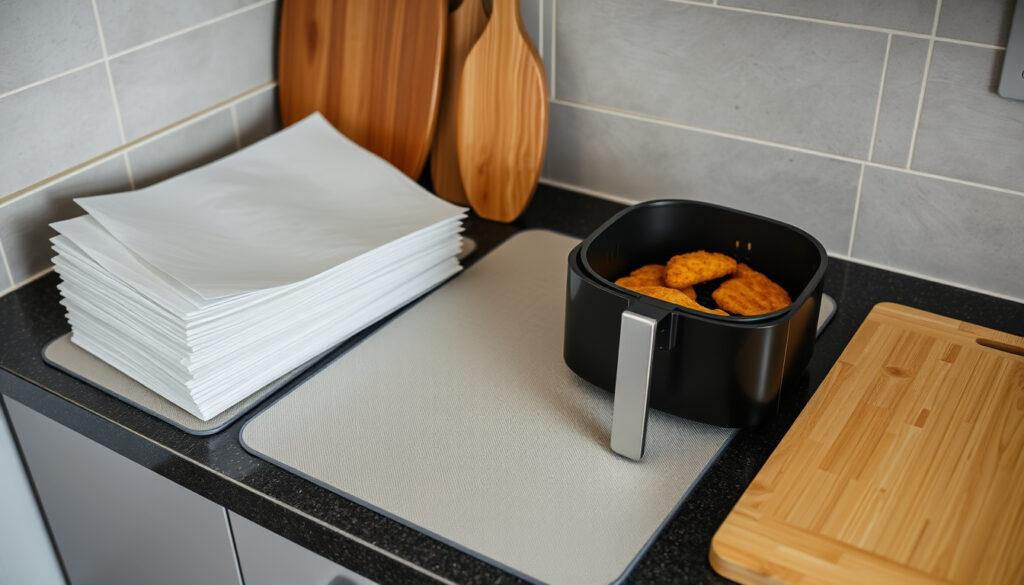
Air Fryer Liners NZ 2025: Best Picks & Safety Tips
If you’ve bought an air fryer recently in New Zealand, you’ve probably spotted those disposable paper liners or silicone cups at the checkout counter and wondered: do they actually help, or are they just another kitchen gadget to waste money on? Between quicker cleaning and Martin Lewis’s safety warning, the answer matters more than you might think. This guide compares the liners available at major NZ retailers, explains how to use them safely, and helps you decide whether disposable or reusable suits your cooking style.
Common pack sizes in NZ: 50 or 100 disposable liners per pack · Material types available: parchment paper (45gsm) and silicone · Retailers stocking liners in NZ: The Warehouse, Briscoes, Spotlight, Countdown, Pak’nSave · Price range (NZ$): 5–10 for disposable packs, 10–20 for reusable silicone
Quick snapshot
- Liners save cleaning time and prevent food from sticking (Homes & Gardens, home-interiors site)
- Parchment liners are food-grade and heat-resistant up to 220°C (Savor + Savvy, consumer guide)
- Major NZ retailers stock both disposable and silicone options (Briscoes, NZ homeware retailer)
- Whether silicone liners deliver the same crispiness as cooking without a liner (Homes & Gardens test)
- Long-term health effects of coated paper liners (no peer-reviewed studies available) (Homes & Gardens test)
- 2024: Martin Lewis (MoneySavingExpert) warned about fire risks from air fryer liners trapping grease (MoneySavingExpert, UK consumer finance site)
- NZ retailers may expand liner ranges as air fryer adoption grows; Kmart and Spotlight already adding new SKUs
Key facts at a glance
The table below distills the key specs for NZ shoppers comparing liners.
| Attribute | Value |
|---|---|
| Most common liner size in NZ | 16 cm square |
| Thickness of popular paper liners | 45 gsm |
| Minimum temperature resistance | 220°C |
| Price of 50-pack paper liners (Briscoes) | approx NZ$5–7 |
| Price of reusable silicone set (Stevens) | approx NZ$15 |
Should you use liners with an air fryer?
The simple answer is yes — but with caveats. Liners reduce cleaning time and prevent food from sticking, which is why many NZ households use them daily. According to Savor + Savvy (consumer guide), liners make air fryer use more convenient by cutting down on scrubbing. However, some liners can restrict airflow if placed incorrectly, and that can affect browning and crispiness.
What are the pros and cons of using air fryer liners?
- Pros: Less cleaning time, non-stick surface without extra oil, easier to remove food.
- Cons: May reduce crispiness if airflow is blocked; some liners can smoke with high-fat foods.
As Homes & Gardens (home-interiors editorial site) notes, silicone basket-style liners can make cleanup faster and still deliver crisp results when used correctly.
Are air fryer liners safe to use?
Yes, when you choose the right material. Parchment paper liners are food-grade and heat-resistant up to 220°C, well above typical air fryer temperatures. Silicone liners are also heat-safe (usually up to 230°C) and BPA-free. A Best Buy customer Q&A (US retailer forum) confirms that many air fryers do not require a liner, but using one that fits properly is safe.
What are the best liners for an air fryer?
New Zealand shoppers have two main choices, and the best option depends on your cooking habits. Homes & Gardens tested several liners and rated the Pintaur Silicone Air Fryer Liners as the top performer for everyday cooking — mostly because they combine easy cleaning with consistent crispiness.
What is the best thing to line your air fryer with?
Parchment paper liners (45 gsm) from The Warehouse and Briscoes are widely available in NZ and cost around NZ$5–7 for a 50-pack. They are disposable, food-grade, and work well for most frozen foods, chips, and vegetables. For round or custom baskets (e.g., Ninja models), check the basket diameter and buy matching round liners — or use square liners folded at the corners. Avoid wax paper, which can smoke or transfer flavours at high heat.
Disposable vs reusable: which is better?
The Savor + Savvy guide notes that reusable liners “ensure you always have a liner available” and are easier to wash than the basket itself. On the other hand, a pack of 100 disposable liners from The Warehouse costs about NZ$10, so the upfront difference is minimal. If you cook daily, a silicone liner pays off in fewer thrown-away sheets.
Disposable liners win on convenience (zero washing), but silicone liners deliver better value for heavy users and produce less waste. For NZ kitchens with an air fryer running 5+ times a week, a silicone liner from Stevens (Toastabags) at NZ$15 is the smarter buy.
Do air fryer liners go under the tray or over?
Placement matters more than most buyers realise. According to Best Buy customer discussions (US retailer forum), a silicone liner should sit in the basket on top of the rack — not underneath it. The liner should not cover the entire bottom; leave a 1–2 cm gap around the edges so hot air can circulate.
How to correctly place a liner in an air fryer basket
- If using a parchment sheet, press it into the basket so it hugs the sides and bottom. Do not let it extend over the rim.
- For silicone basket-style liners, simply drop them into the basket — they naturally sit on the rack.
- Always ensure the liner does not block the air intake vent at the back or sides of the basket.
Should you use a liner with a perforated basket?
Perforated baskets are designed to maximise airflow. Using a solid (non-perforated) liner can block the holes and reduce hot air circulation, leading to uneven cooking. Homes & Gardens recommends using perforated liners (or no liner) with perforated baskets. If your air fryer has a solid tray, a standard solid liner works fine.
Is it better to use air fryer liners or not?
That depends on what you cook and how much you value easy cleaning. Homes & Gardens found that silicone liners can make cleanup faster and still deliver crisp results, but the test also revealed that some liners reduce browning if they insulate food from direct heat.
What are the disadvantages of air fryer liners?
- Can reduce browning and crispiness if they block direct heat.
- Reusable liners need thorough cleaning to avoid residue and odour build-up.
- For high-fat foods, liners may prevent grease from dripping into the basket, causing smoke and potential fire risk — exactly what Martin Lewis warned about.
When should you avoid using a liner?
Avoid liners when cooking very fatty foods (bacon, sausages, burgers) because the accumulated grease can overheat and smoke. Also skip liners if your air fryer model manual explicitly says not to use them. Some smaller baskets (like the Emerald 4L) are already non-stick and designed to work without a liner (Best Buy customer Q&A).
Cookies, crumbed chicken, and foods that need a dry, crispy exterior will brown better without a liner. For frozen chips or roasted vegetables, liners are fine. Know your recipe before you drop in the paper.
What did Martin Lewis say about using air fryers?
Martin Lewis, founder of MoneySavingExpert.com (UK consumer finance site), issued a public warning in 2024 about using air fryers for large meals. He cautioned that liners can trap grease and fat, creating a fire hazard if the appliance is overloaded.
Did Martin Lewis warn about air fryer liners specifically?
Yes, his warning specifically mentioned using accessories like liners that may restrict airflow or catch fire if grease builds up. He recommended always checking manufacturer guidelines before using any aftermarket accessories.
What safety advice did he give for cooking big meals?
Lewis advised against cooking large batches — such as a whole chicken or large roast — in a standard air fryer, because the liners can cause the appliance to overheat. For NZ shoppers, this is especially relevant if you’re tempted to use a liner and fill the basket to the brim.
The pattern: liners themselves are safe, but combining a liner with an overfilled basket and fatty food creates a triple risk. Stick to the manufacturer’s maximum fill line, and use liners only when appropriate.
Disposable vs reusable liners – comparison
The table below details five key differences between disposable paper and reusable silicone liners.
| Feature | Disposable paper (45gsm) | Reusable silicone |
|---|---|---|
| Price (NZ$) | $5–7 for 50-pack (Briscoes); $10 for 100-pack (The Warehouse) | $15 single set (Stevens, Toastabags) |
| Lifespan | Single use, then discard | 6–12 months with proper care |
| Cleaning | None (throw away) | Dishwasher-safe or hand-wash |
| Airflow | Solid sheet – needs holes or gap | Often solid but thin; some have small holes |
| Heat resistance | 220°C (parchment) | 230°C (food-grade silicone) |
| Best for | Light use, frozen food, chips | Daily cooking, sticky or saucy foods |
Parchment vs silicone – spec comparison
Six technical specifications, one clear takeaway: parchment is for one-and-done convenience; silicone is for durability and heat performance.
| Spec | Parchment paper liner | Silicone liner |
|---|---|---|
| Material | Food-grade parchment (cellulose fibres, calcium carbonate) | 100% food-grade silicone (FDA, BPA-free) |
| Thickness | 45 gsm | ~1.5–2 mm |
| Heat resistance | Up to 220°C | Up to 230°C |
| Reusability | Single use | Hundreds of uses |
| Weight | Ultra-light | Moderate (20–50 g) |
| Cost per use (NZ$) | ~$0.10–0.14 | ~$0.02–0.03 over 1 year of weekly use |
Upsides
- No scrubbing the basket after cooking
- Non-stick even without oil spray
- Protects basket from scratches and wear
- Great for cooking multiple batches (swap liner quickly)
Downsides
- Some liners reduce browning and crispiness
- Paper liners add to household waste
- Silicone liners must be cleaned thoroughly to avoid odour
- Can interfere with basket sensors in some models
How to use air fryer liners – step-by-step
Four steps, one golden rule: check your basket’s dimensions first. A liner that’s too large will fold onto itself and burn; one that’s too small won’t protect the basket.
- Measure your basket. Use a ruler to measure the width and depth of the basket interior. Most NZ-standard square baskets are 16 cm x 16 cm.
- Choose the right liner. For a square basket, buy square parchment liners that are 1–2 cm smaller than the basket width. For round baskets, buy round liners (e.g., Toastabags silicone set).
- Place the liner. Drop the liner into the basket so it sits flat on the rack. If using parchment, gently press it into the corners so it doesn’t fly up during cooking.
- Add food and cook. Distribute food evenly, leaving a gap around the edges. Don’t fill past the max line. Start checking food 2–3 minutes early, as liners can slightly alter cooking time.
What’s confirmed vs what’s unclear
Drawing from retail listings, consumer tests, and customer forums, here’s where the evidence stands.
Confirmed facts
- Air fryer liners are available in several NZ retailers (The Warehouse, Briscoes, Countdown, Pak’nSave, Spotlight).
- Martin Lewis (MoneySavingExpert) posted a warning about air fryer cooking safety in 2024.
- Parchment paper liners are food-grade and heat-resistant up to 220°C (Savor + Savvy).
- Reusable silicone liners make cleanup faster (Homes & Gardens).
What remains unclear
- Whether silicone liners are as effective for crispiness as cooking without a liner. Consumer tests are mixed.
- Long-term health impact of using coated paper liners (no independent studies).
Expert perspectives on air fryer liners
“Our warning is simple: don’t overload your air fryer, especially when using accessories that can trap grease. Always follow the manufacturer’s guidelines.”
— Martin Lewis, MoneySavingExpert.com, via public statement 2024
“Our parchment liners are fluorescent-free, chemical-free, and toxic-free – made from food-grade materials that are safe for home cooking.”
— The Warehouse product description for Air Fryer Parchment Liners
“The liner protects the basket from cooked-on food, saving cleaning time. It’s dishwasher-safe, so you just drop it in the machine and reuse it.”
— Toastabags (Stevens) product info for silicone liners
The implication: manufacturers and safety advocates agree that liners are safe when used correctly — but the key variable is how you fill the basket and whether you leave room for airflow.
For a detailed comparison of silicone vs parchment liners, check out our guide on air fryer liners in Ireland.
Frequently asked questions
Can air fryer liners catch fire?
Yes, but it’s rare and usually due to misuse. If a liner is too large and touches the heating element, or if grease pools on the liner and overheats, a fire can start. Always leave a gap around the edges and avoid using liners for very fatty foods cooked at high temperature.
Are air fryer liners dishwasher safe?
Silicone liners are generally dishwasher-safe. Disposable parchment liners are not — they are single-use and should be discarded after cooking.
How do I measure my air fryer basket for a liner?
Use a ruler to measure the interior width and depth. For square baskets, note the exact length of one side. For round baskets, measure the diameter. Then buy liners that are 1–2 cm smaller in each dimension.
Do I need to adjust cooking time when using a liner?
Sometimes yes. Parchment liners can insulate food slightly, so check food 2–3 minutes before the recommended cooking time. Silicone liners have less effect on times but may still add a minute or two.
Are there any air fryer models that should not use liners?
Some models with bottom-mounted heating elements (e.g., some Xiaomi, Cosori models) may caution against liners. Check your manual. Perforated baskets also work best without a solid liner.
What is the difference between parchment paper and wax paper for air fryers?
Parchment paper is heat-resistant up to 220°C and non-stick. Wax paper has a thin paraffin coating that melts at around 45°C, so it will smoke and burn in an air fryer. Never use wax paper.
Can I reuse disposable paper air fryer liners?
Technically you could reuse a parchment liner if it’s not greasy or charred, but it loses its non-stick property and may tear. For food safety, treat them as single-use.
Where can I buy air fryer liners in bulk in New Zealand?
The Warehouse sells 100-packs of square parchment liners for around NZ$10. Spotlight and Briscoes also carry multi-packs. For silicone bulk, Trade Me has sets of 4–6 liners from private sellers.
Related reading
Editor’s note: This guide is based on publicly available product listings, consumer tests, and safety warnings as of March 2025. Prices and availability may vary across NZ retailers.
More related posts
 What Is Your Body Lacking When You Get Boils? Key Deficiencies
 Spring Hill Corrections Facility: Visits, Inmate Life & Security
 How to Use Google Wallet – Complete Setup and Payment Guide
 New Zealand Weather Cold Snap: March 2026 Forecast
 How to Get Rid of Mouth Ulcers Fast: Causes & Treatments
 Swimming Pools Near Me in Ireland – Find Public, Private & Pay-as-You-Go
 Best Moisturizer for Oily Skin: Expert Picks & Guide
 Latest Breaking News Today NZ: Headlines, Migration, Culture