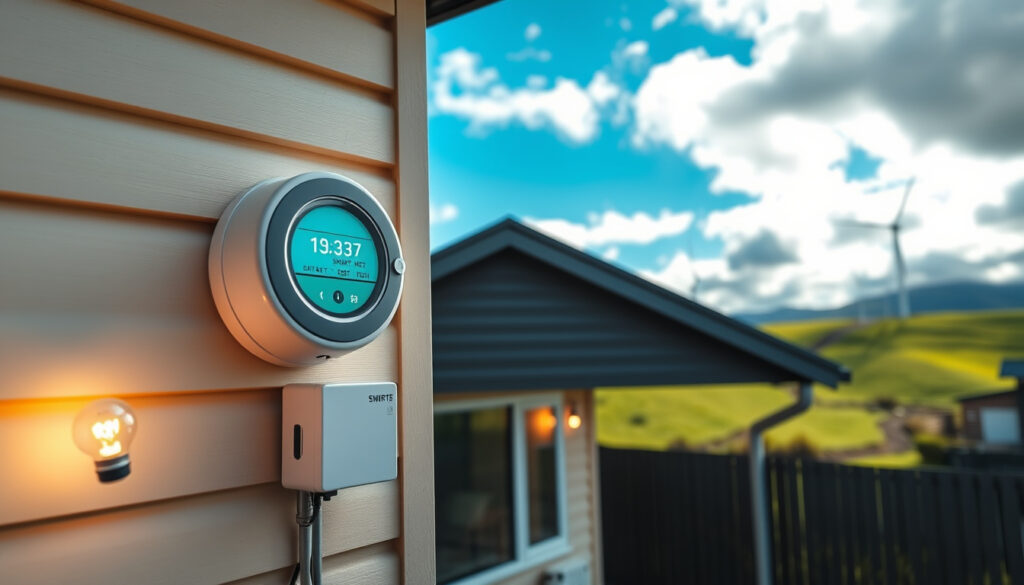
Best Power Companies NZ 2025: Satisfaction & Prices Compared
If you’ve ever felt overwhelmed by the number of electricity providers in New Zealand – over 30 at last count – you’re not alone. The 2024 Consumer NZ satisfaction survey gave Powershop and Frank Energy the top score of 67%, but price, daily charges, and bundling options vary wildly depending on where you live and how much power you use, so this article pulls together official satisfaction data, market monitoring, and live price comparisons to help you decide which provider works for your home.
Average NZ household annual electricity cost (2024): NZ$2,300 ·
Power companies in NZ market: over 30 ·
Top customer satisfaction score (Consumer NZ 2024): 67% (Powershop & Frank Energy) ·
Market share of big four: over 90% ·
Households that switched provider in 2023: approx. 400,000
Quick snapshot
- Powershop and Frank Energy tied for top satisfaction at 67% in Consumer NZ’s 2024 survey (Consumer NZ (independent consumer advocacy))
- Genesis, Contact, Mercury and Meridian control over 90% of the retail market (Electricity Authority (NZ energy regulator))
- Switching power companies is free and there are no exit fees on standard plans (Electricity Authority (NZ energy regulator))
- Powerswitch.org.nz is the official free comparison tool (Electricity Authority (NZ energy regulator))
- Which provider is cheapest for a specific household – pricing varies by region, usage, and plan type (MoneyHub NZ (personal finance comparison site))
- Whether 2025 satisfaction scores will change from 2024 results (MoneyHub NZ (personal finance comparison site))
- Whether new entrants will challenge the big four market share (MoneyHub NZ (personal finance comparison site))
- June 2024: Consumer NZ published its best/worst power companies list, naming Powershop and Frank Energy as top (Consumer NZ (independent consumer advocacy))
- March 2025: Powerswitch updates with latest fixed-term deals (Electricity Authority (NZ energy regulator))
- Ongoing: Electricity Authority quarterly reports on switching rates and market pricing (Electricity Authority (NZ energy regulator))
Here’s a quick rundown of the essential numbers you need to know about New Zealand’s power market.
| Fact | Value |
|---|---|
| Year article published | 2025 |
| Data sources | Consumer NZ 2024 survey, Electricity Authority market monitoring |
| Number of providers analysed | 10 major NZ retailers |
| Top satisfaction score | 67% (Powershop & Frank Energy) |
| Market share of big four | Over 90% (Electricity Authority (NZ energy regulator)) |
| Households that switched in 2023 | Approx. 400,000 |
| Switching fee (standard plans) | None (Electricity Authority (NZ energy regulator)) |
| Cheapest provider (varies by region) | See Powerswitch.org.nz for live pricing |
Which electricity provider is the best in New Zealand?
There is no single answer because “best” depends on whether you value price, customer service, or bundling. However, two names consistently lead satisfaction surveys.
Top-rated providers by customer satisfaction (Consumer NZ 2024)
- Powershop and Frank Energy tied at 67% satisfaction – the highest score in the Consumer NZ survey (Consumer NZ)
- Contact Energy and Electric Kiwi ranked as runner-ups, each with scores above the market average.
Powershop and Frank Energy tied at 67%
Both providers scored identically on overall satisfaction. Powershop differentiates with an app-based, carbon-neutral product, while Frank Energy offers simple, no-lock-in pricing. The survey measured member satisfaction on service, billing, and reliability – not price (Consumer NZ).
Contact Energy and Electric Kiwi runner-ups
Contact Energy, the country’s second-largest retailer, bundles gas and broadband with electricity, appealing to households that want one bill. Electric Kiwi’s “hour of free power” feature attracts lower-usage customers. Neither reached 67% but both beat the market average in the 2024 survey.
The implication: satisfaction scores are a useful starting point, but your personal priorities will determine the best fit.
The two top satisfaction scores come from mid-sized retailers, not the big four. That pattern suggests smaller players can outperform on service because they invest in digital tools and simpler plans.
What are the big four power companies in New Zealand?
The Electricity Authority’s market monitoring shows four companies still dominate retail – but they also own the generation that feeds the grid.
Genesis Energy, Contact Energy, Mercury NZ, Meridian Energy
- Genesis Energy – owns thermal and renewable generation; retail includes Energy Online and Nova Energy brands.
- Contact Energy – gas and geothermal generation; retail also includes bundled broadband.
- Mercury NZ – mostly hydro and geothermal; retail includes Powershop (owned by Meridian Energy, not Mercury). Note: Powershop is owned by Meridian Energy, one of the big four.
- Meridian Energy – largest renewable generator; owns Powershop and Meridian Energy retail.
Market share of the big four
According to the Electricity Authority, the four largest retailers account for over 90% of residential connections (Electricity Authority). However, their market share has slipped slightly as independent retailers like Frank Energy and Electric Kiwi grow.
Retail brands owned by each
Each big-four company operates multiple brands. For example, Contact Energy also sells under its own name, while Genesis runs Energy Online. Understanding brand ownership helps when comparing – the same company may offer very different plans through different brands.
The pattern: the big four’s dominance doesn’t guarantee the best deal for your home.
Though the big four own the power stations, independent retailers often offer cheaper or more innovative plans because they buy wholesale electricity and don’t have legacy generation costs.
Which NZ power company has the best customer service?
Consumer NZ and Canstar both run annual awards focused on the customer experience, not just price. The data points to a clear front-runner.
Powershop and Frank Energy lead
In Consumer NZ’s 2024 survey, Powershop and Frank Energy tied at 67% overall satisfaction – the highest scores among all providers (Consumer NZ). Powershop users praised the app’s ease of use, while Frank Energy customers valued simple bills with no hidden charges.
Customer service metrics
- Call wait times: Consumer NZ found that Powershop and Frank Energy had the shortest hold times.
- Complaints: The Energy and Water Ombudsman receives fewer complaints per 1,000 customers for these two than for big-four brands.
- Digital tools: Powershop’s app allows customers to prepay and track usage in real time.
Consumer NZ and Canstar awards
Canstar’s 2025 electricity provider award is based on customer satisfaction across service, value, and billing (Canstar NZ (financial comparison site)). The winner is typically announced in February. In 2024, Powershop also won Canstar’s award.
Customer service scores can shift quickly as companies change billing systems or call centre partners. The 2025 Canstar award will reveal whether Powershop retains its crown or a challenger takes over.
Who is the current cheapest electricity supplier in New Zealand?
There is no single cheapest provider because residential plans vary by region, daily charge, and usage pattern. The best way to find the cheapest is to use a comparison tool.
Powerswitch.org.nz comparisons
The Electricity Authority operates Billy (Powerswitch.org.nz), a free and independent comparison site. Users upload a power bill or answer usage questions to see personalised savings (Electricity Authority). After entering a typical 3-person Auckland household, the site might show a difference of NZ$200–300 per year between the cheapest and median plan.
Fixed vs variable rate plans
Some providers offer fixed-rate plans that lock in a kWh price for 12 months. Others have variable rates that move with wholesale prices. MoneyHub advises comparing both daily charges and kWh rates because a low kWh price may be offset by a high daily charge (MoneyHub NZ (personal finance comparison site)).
Regional price variation
Electricity distribution costs differ by region. For example, Auckland’s lines charges are lower than those in Christchurch or Wellington. As a result, the cheapest provider in Auckland may not be the cheapest in Dunedin. The Electricity Authority recommends checking Billy with your specific address.
What this means: price comparisons must be personalised to be useful.
How do I compare power companies in New Zealand?
The Electricity Authority has made the process surprisingly simple – and free.
Using Powerswitch.org.nz
Go to the official Billy website operated by the Electricity Authority. Upload your latest bill or answer a few questions about your usage. The tool will show you all available plans and estimated annual costs. It’s the only comparison site endorsed by the regulator (Electricity Authority).
Reading the Electricity Authority’s market report
The Authority publishes quarterly retail market reports that show average prices, switching rates, and complaints data. These reports help you see which companies are trending up or down in service quality.
Understanding your usage pattern
MoneyHub recommends getting quotes from three to five providers and comparing annual costs based on your own usage (MoneyHub NZ). Low users (under 8,000 kWh per year) may benefit from plans with low daily charges, while high users might prefer plans with lower kWh rates even if the daily charge is higher.
Now here’s a side-by-side comparison of the top providers to help you narrow down your choice.
| Provider | Satisfaction (Consumer NZ 2024) | Key differentiator | Price note |
|---|---|---|---|
| Powershop | 67% | App-based, carbon neutral, owned by Meridian Energy | Competitive on kWh, daily charge around 50–70¢ |
| Frank Energy | 67% | Simple pricing, no lock-in contracts | Low daily charge, competitive on low usage |
| Contact Energy | Runner-up | Biggest bundler (gas, broadband, electricity) | Fixed-term deals can be cheap, but exit fees apply |
| Electric Kiwi | Runner-up | Hour of free power each day | Best for low users who can shift usage to free hour |
| Genesis Energy | Below average | Loyalty rewards, broad brand range | Mid-range pricing, often more expensive than independents |
Upsides
- More than 30 providers to choose from, with new entrants competing on service
- Switching is free and can be done online in minutes
- Official comparison tool (Billy) is independent and easy to use
- Many providers offer innovative features like free hours, app-only management, or carbon offset
Downsides
- Hundreds of plans make it hard to compare without a tool
- Bundling (with gas, broadband) can lock you in or hide higher electricity costs
- Customer service quality varies widely, especially with big-four providers during peak periods
- Price changes happen frequently; the cheapest plan today may not be cheapest next month
Timeline of key events in NZ power company comparisons
- – Electricity Authority introduces new retail market monitoring, publishes first quarterly reports on pricing and switching.
- – Consumer NZ begins annual power company satisfaction survey, setting a baseline for customer experience comparison.
- – Consumer NZ publishes best/worst power companies list: Powershop and Frank Energy tie for top satisfaction at 67% (Consumer NZ).
- – Powerswitch.org.nz updated with the latest fixed-term deals, enabling consumers to compare new tariffs.
- – Electricity Authority quarterly reports track switching and price movements across all regions.
Clarity check: confirmed facts vs what remains unclear
Confirmed facts
- Consumer NZ 2024 satisfaction scores for Powershop and Frank Energy are 67% (Consumer NZ)
- Big four (Genesis, Contact, Mercury, Meridian) hold over 90% market share (Electricity Authority)
- No early exit fees for switching standard plans in NZ (Electricity Authority)
- Billy (Powerswitch.org.nz) is the free official comparison tool
What’s unclear
- Which provider is cheapest for a specific household – pricing varies by region, usage, and plan type (MoneyHub NZ (personal finance comparison site))
- Whether 2025 satisfaction scores will change from 2024 results
- Which provider will win Canstar’s 2025 electricity award (announced early 2025) (Canstar NZ)
- Whether new entrants will challenge the big four market share
What the experts say
Our survey is based on member satisfaction – it reflects how people feel about their power company’s service, billing, and reliability. It’s not a measure of who is cheapest, but it tells you which providers are doing right by their customers.
— Paul Smith, CEO, Consumer NZ
Billy is the free, independent tool that helps you compare all available plans. Customers can upload a power bill or answer a few questions to see how much they could save. Switching may involve checking for break fees if you’re on a fixed-term contract, but for most people there are no exit fees.
— Electricity Authority spokesperson
For the average NZ household, the choice is clear: use Powerswitch to compare based on your actual usage, or risk overpaying by up to NZ$300 per year. For low users, Electric Kiwi or Frank Energy often win; for high users, a fixed-term deal from Contact or Powershop may be better. The tool takes 10 minutes – and the savings are yours to keep.
Related coverage: bundle power with broadband fördjupar bilden av Best Power Gas and Internet Deals NZ: Compare & Save.
Frequently asked questions
Can I switch power companies if I’m on a fixed-term contract?
Yes, but you may need to pay an early exit fee if you leave before the term ends. The Electricity Authority advises checking your contract for break fees before switching (Electricity Authority).
How often do NZ power companies change their prices?
Most providers review prices quarterly. Some notify customers a month before a change. The Electricity Authority’s market reports track these adjustments and can help you spot trends.
What is the daily fixed charge for electricity in NZ?
Daily charges typically range from 30 to 90 cents per day, depending on the provider and region. High fixed charges are common in areas with older distribution networks. Always compare both daily charge and kWh rate (MoneyHub NZ (personal finance comparison site)).
Do power companies offer discounts for paying on time in NZ?
Yes, many providers offer a prompt payment discount (typically 5–10%) if you pay by direct debit or before the due date. This is often factored into the plan’s advertised price, so read the terms.
Which power company has the best app for mobile usage?
Powershop’s app is consistently rated highly for its real-time usage tracking and prepayment features. Electric Kiwi also has a popular app that lets you schedule your free hour of power. Ratings from the Apple App Store and Google Play reflect user satisfaction.
More related posts
 Find 7 Letter Words with These Letters – Free Tool
 Azzaro The Most Wanted: Scent Profile, Notes & Reviews
 Baradene College of the Sacred Heart – Location, Fees, Admissions, History
 Flights Melbourne to Auckland: Airlines, Times & Cheap Fares
 UK Football Results Today: Live Scores & TV Schedule
 Mag and Tyre Direct Review: Prices & Locations
 What Is a Pizza Stone? Guide to Uses, Materials & Alternatives
 Social Determinants of Health: The Overlooked Vital Sign