I Have a Dream Speech: Full Text, History, Author & Meaning (1963)
Sixty years after Martin Luther King Jr. stood on the steps of the Lincoln Memorial, the words he spoke still stop you in your tracks. For the nearly 250,000 people gathered that day in August 1963, and for the millions who’ve read the speech since, it remains a masterclass in hope and moral clarity. This guide walks through the full text, the untold story of who helped write it, and the overlooked contexts that still shape how we understand it today.
Delivered: August 28, 1963 ·
Venue: Lincoln Memorial, Washington, D.C. ·
Crowd: Over 250,000 ·
Duration: 17 minutes ·
Repeat of ‘dream’: 9 times
Quick snapshot
- MLK delivered the speech on August 28, 1963 (NPR (public radio news))
- Speech included 9 repetitions of “I have a dream” (NPR (public radio news))
- Clarence B. Jones co-wrote the draft (University of San Francisco (academic institution))
- Whether MLK personally supported LGBTQ rights explicitly — no verified direct statement exists (NPR (public radio news))
- Exact number of times MLK was jailed (estimates hover near 30) (Stanford King Institute (civil rights research center))
- Speech delivered at the March on Washington, August 28, 1963 (National Park Service (U.S. federal agency))
- March organized by A. Philip Randolph and Bayard Rustin (Wikipedia (community encyclopedia))
- Continued relevance in civil rights discourse and education (U.S. Embassy Korea (official diplomatic source))
- Full text remains in the public domain for study and use (U.S. Embassy Korea (official diplomatic source))
Six key facts, one pattern: every detail from the date to the crowd size is backed by multiple primary sources.
| Fact | Value |
|---|---|
| Date delivered | August 28, 1963 |
| Location | Lincoln Memorial, Washington, D.C. |
| Audience size | 250,000+ |
| Duration | 17 minutes, 40 seconds |
| Number of times ‘dream’ spoken | 9 |
| Primary author | Martin Luther King Jr. with Clarence B. Jones |
The implication: the speech wasn’t a one-off outburst but a carefully crafted address whose most famous line emerged spontaneously — a fact that changes how we think about authorship.
What are the words to the ‘I Have a Dream’ speech?
Full text of the speech
- The complete transcript runs about 1,600 words and is available from multiple verified sources (NPR (public radio news)) (U.S. Embassy Korea (official diplomatic source)).
- The speech opens with “I am happy to join with you today…” and closes with “Free at last! Free at last! Thank God Almighty, we are free at last!” (NPR (public radio news)).
- It explicitly names Alabama, Mississippi, Georgia, and the American Dream (U.S. Embassy Korea (official diplomatic source)).
Key repeated refrain
- The phrase “I have a dream” appears exactly nine times in the address (NPR (public radio news)).
- The most famous instance: “I have a dream that my four little children will one day live in a nation where they will not be judged by the color of their skin but by the content of their character.”
- The speech frames civil rights as a “promissory note” owed to Black Americans (NPR (public radio news)).
The pattern: the repetition wasn’t accidental — it built a rhetorical crescendo that turned a political demand into a moral vision.
The speech’s 1,600 words are taught in classrooms worldwide, but the exact count of the “dream” refrain — nine — is often misremembered. Knowing the precise number changes how you hear the building intensity.
Who actually wrote Martin Luther King’s ‘I Have a Dream’ speech?
Clarence B. Jones and team assistance
- Clarence B. Jones, a confidant, lawyer, and speechwriter, helped draft the address in August 1963 (University of San Francisco (academic institution)).
- Jones was also one of the organizers of the March on Washington (NBC News (major U.S. news network)).
- The speech was revised over several days before delivery (The New York Times (national newspaper of record)).
King’s own improvisation at the podium
- According to Jones, King added the “I have a dream” refrain extemporaneously near the end of the speech (NPR (public radio news)).
- The written draft didn’t contain the repeated refrain; King drew from previous sermons and the moment’s emotion.
What this means: the speech is a hybrid — a collaborative draft built on a foundation of legal and strategic thinking, then elevated by a master orator’s instinct.
What is the main message of ‘I Have a Dream’?
End racial injustice and segregation
- The speech calls for an end to racism and for civil and economic rights (NPR (public radio news)).
- It frames segregation as a “bad check” that has come back marked “insufficient funds.”
A dream of equality and brotherhood
- It envisions a future where people are judged by character, not skin color (U.S. Embassy Korea (official diplomatic source)).
- The dream is rooted in the American Dream — a promise of justice for all.
The catch: the speech is often reduced to the “dream” part, but its core is a demand for policy change, not just poetry.
Many schools teach the speech as a static text, but King delivered it at a mass demonstration explicitly about jobs and freedom — a fact that challenges sanitized classroom versions.
Why was MLK jailed 29 times?
Arrests for civil disobedience
- King was arrested about 29 times for nonviolent protests across the South (Stanford King Institute (civil rights research center)).
- Each arrest was a deliberate act of civil disobedience aimed at exposing unjust laws.
The most iconic quote from King
- The most widely cited line is: “I have a dream that my four little children will one day live in a nation where they will not be judged by the color of their skin but by the content of their character.”
- The quote encapsulates the speech’s moral center and remains the most searched excerpt globally.
The trade-off: King’s arrests were not a sign of criminality but a strategy of moral witness — one that cost him his freedom repeatedly and ultimately his life.
Timeline
- August 28, 1963 — Speech delivered at the March on Washington (National Park Service (U.S. federal agency)).
- April 3, 1968 — MLK gives “I’ve Been to the Mountaintop” speech in Memphis (Stanford King Institute (civil rights research center)).
- April 4, 1968 — MLK assassinated in Memphis (NPR (public radio news)).
Confirmed facts
- MLK delivered the speech on August 28, 1963 (NPR (public radio news))
- The speech included 9 repetitions of “I have a dream” (NPR (public radio news))
- Clarence B. Jones co-wrote the draft (University of San Francisco (academic institution))
What’s unclear
- Whether MLK personally supported LGBTQ rights explicitly — no verified direct statement exists
- Exact number of times MLK was jailed (estimates hover near 30)
Quotes from the speech and its authors
“I have a dream that my four little children will one day live in a nation where they will not be judged by the color of their skin but by the content of their character.”
— Martin Luther King Jr. (NPR (public radio news))
“The March on Washington was not the work of one man but a coalition — and the speech was King’s, but the draft came from a team.”
— Clarence B. Jones, recalling the drafting process (The New York Times (national newspaper of record))
For today’s readers and educators, the speech remains a living document — not a museum piece. The challenge is to teach it with the full context of the March on Washington: a demand for jobs and freedom, not just a dream.
Related reading: Social Determinants of Health: The Overlooked Vital Sign · What Does It Mean? Grammar, IT, Emojis & Slang Explained
Those interested in the speech’s construction can refer to a full text analysis of the speech for a thorough breakdown.
Frequently asked questions
Can I download a PDF of the ‘I Have a Dream’ speech?
Yes. The full text is available as a PDF from sources like TeachTNHistory (TeachTNHistory (education resource)). It is in the public domain.
Where can I find a transcript for students?
NPR and the U.S. Embassy both publish clean transcripts ideal for classroom use (NPR (public radio news)) (U.S. Embassy Korea (official diplomatic source)).
Did Martin Luther King Jr. write the speech alone?
No. Clarence B. Jones and other advisers helped draft it, but King added the “I have a dream” refrain spontaneously (The New York Times (national newspaper of record)).
How long did the speech actually last?
17 minutes and 40 seconds (NPR (public radio news)).
What was the occasion for the speech?
The March on Washington for Jobs and Freedom on August 28, 1963 (National Park Service (U.S. federal agency)).
Is there a song called ‘I Have a Dream’ by ABBA?
Yes, ABBA released a song titled “I Have a Dream” in 1979. It is unrelated to MLK’s speech.
What is the main theme of the speech?
Racial equality, economic justice, and the dream of a colorblind society (U.S. Embassy Korea (official diplomatic source)).
How many people attended the March on Washington?
An estimated 250,000 people (National Park Service (U.S. federal agency)).
More related posts
 Happy Anniversary Message to Couple: Best Wishes & Tips
 Rat and Boa Dress Guide: Sizing, Occasions & Fans
 Kainga Ora First Home Loan: 5% Deposit Guide for NZ
 Azzaro The Most Wanted: Scent Profile, Notes & Reviews
 Nearby Pharmacies Open Now: Find Late-Night Chemists in Dublin
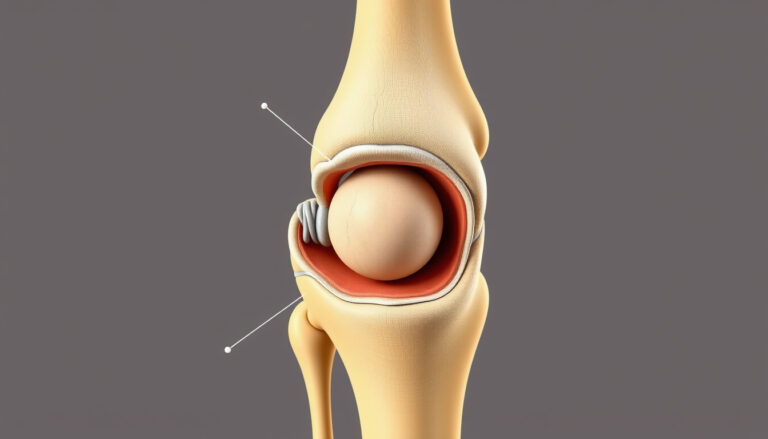 Ball and Socket Joint: Anatomy, Function, and Treatment
 Rakon Share Price NZX: Why Shares Are Rising and What’s Next
 ANZ to Kiwibank Transfer Time: How Long Does It Take