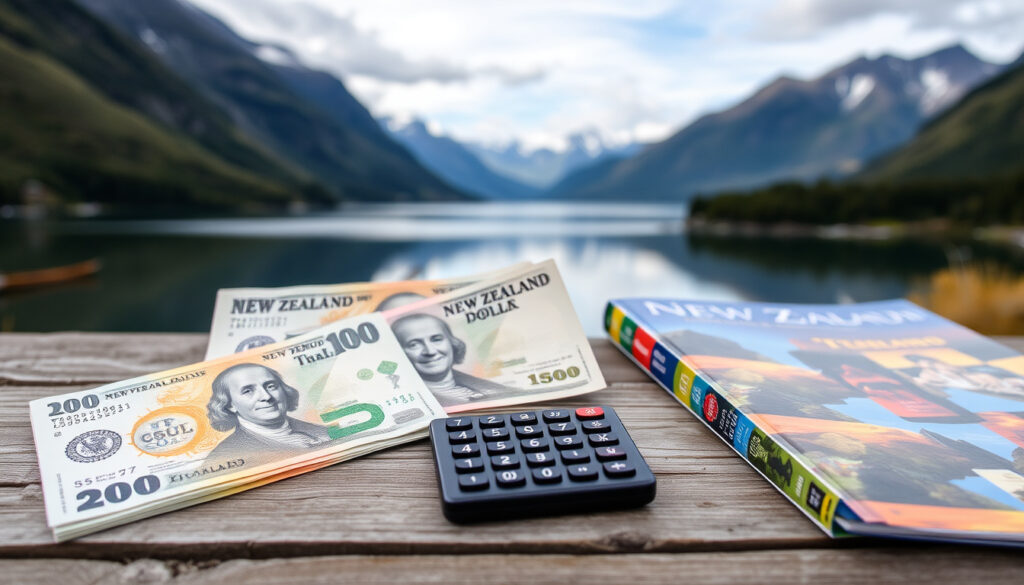
US Dollar to NZ Dollar: Current Rate & Travel Guide
If you’re planning a trip to New Zealand or sending money across the Pacific, the exchange rate between the US dollar and the New Zealand dollar can make a real difference to your budget. Right now, the mid-market rate sits around 1 USD = 1.68 NZD, but the rate you actually get depends heavily on where and how you convert your money.
Current mid-market rate: 1 USD = 1.68 NZD OFX (foreign exchange provider) ·
$100 USD conversion: 100 USD = 168 NZD Xe (currency converter) ·
Cheapest flight to New Zealand: from $601 USD Skyscanner (travel search engine)
Quick snapshot
- Mid-market rate: 1 USD ≈ 1.68 NZD OFX (foreign exchange provider)
- 100 USD converts to about 168 NZD at mid-market Xe (currency converter)
- Retail rates vary: Wise shows 1.751, Revolut shows 1.66 Wise (online money transfer) Revolut (financial app)
- Whether the NZD will strengthen or weaken in the near term depends on macroeconomic factors MoneyHub (consumer finance guide)
- Exact impact of US monetary policy on NZD is uncertain MoneyHub (consumer finance guide)
- Over the past year, the NZD has ranged between 0.55 and 0.70 USD MoneyHub (consumer finance guide)
- Watch interest rate decisions from the Federal Reserve and Reserve Bank of New Zealand MoneyHub (consumer finance guide)
Here’s a quick reference table for common USD conversions at the mid-market rate.
| USD amount | NZD equivalent (mid-market) | Source |
|---|---|---|
| $1 | 1.68 NZD | OFX (foreign exchange provider) |
| $100 | 168 NZD | Xe (currency converter) |
| $500 | 840 NZD | Calculated from mid-market |
| $1,000 | 1,680 NZD | OFX (foreign exchange provider) |
How much is $100 US in NZ?
At the mid-market rate, 100 US dollars converts to about 168 New Zealand dollars. But what you actually get depends on the service you use. Wise (online money transfer) shows a rate of 1 USD = 1.751 NZD, which would give you 175.12 NZD. Xe (currency converter) shows 173.92 NZD. Revolut (financial app) shows 166.86 NZD. The difference between the best and worst offer amounts to nearly 9 NZD on just $100.
How to convert USD to NZD?
- Use a mid-market rate reference from Xe (currency converter) or Wise (online money transfer) to see the real exchange rate.
- Compare provider rates directly: Revolut (financial app), Western Union (money transfer), and OFX (foreign exchange provider) all publish live rates.
- Watch for hidden fees: some providers add a markup on top of their displayed rate.
What is the current exchange rate?
The mid-market rate fluctuates throughout the day. At the time of writing, OFX (foreign exchange provider) listed 1 USD = 1.67942 NZD, while Xe (currency converter) showed 1.73924 NZD. The variance is typical: consumer-facing rates almost always include a margin.
The implication: even small rate differences add up, especially for larger transfers.
Is the NZD getting stronger?
The New Zealand dollar has been volatile. Over the past year, it has traded between 0.55 and 0.70 USD, according to MoneyHub (consumer finance guide). Several factors influence NZD strength: interest rate differentials between the US Federal Reserve and the Reserve Bank of New Zealand, commodity prices (NZ is a major dairy exporter), and tourism demand. When the US dollar strengthens globally, NZD tends to weaken, making New Zealand cheaper for American visitors.
How strong is the US dollar in New Zealand?
Right now, the US dollar buys more NZ dollars than it did a year ago. That means travel, accommodation, and everyday purchases in New Zealand are relatively cheaper for Americans. But the margin is slim: the NZD has held ground above 0.55 USD, suggesting the US dollar’s strength is not overwhelming.
Why is the NZ dollar crashing?
“Crashing” is strong. The NZD has declined against the USD as the Fed raised interest rates faster than the RBNZ. But MoneyHub (consumer finance guide) notes the currency is still within its normal trading range. A sustained fall would require a deeper economic shock.
A weaker NZD is great for US tourists but tough for Kiwis traveling abroad or importing goods. The same $100 USD now stretches further at cafes and hotels in Queenstown.
The pattern: currency moves create winners and losers depending on which side of the transaction you’re on.
What’s the cheapest month to fly to NZ?
Historically, May offers the lowest airfares to New Zealand, with round-trip flights from the US starting around $601 USD according to Skyscanner (travel search engine) data. The exchange rate adds another layer: when the NZD is weak, your dollar goes further on the ground, effectively lowering the total trip cost.
How does the exchange rate affect travel costs?
- Daily travel budget: a typical backpacker spends $150–250 NZD per day. At 1.68 NZD per USD, that’s $89–149 USD.
- Big expenses: a hotel charging $200 NZD per night costs about $119 USD at current rates.
- Dining: a restaurant meal at $30 NZD is roughly $18 USD.
Is $70,000 a good salary in New Zealand?
This is a separate but related question for anyone considering moving. $70,000 NZD is around the national median salary, according to Stats NZ (New Zealand’s official statistics agency). In US dollars, that’s about $41,700 USD at the current rate — comparable to a median US salary in lower-cost states. But New Zealand’s cost of living, especially housing and groceries, is higher than many US cities.
For an American moving to NZ on a $70,000 NZD salary, the purchasing power is roughly equivalent to earning $42,000 USD in the US — but you’ll need to budget for higher food and rent costs, particularly in Auckland and Wellington.
The catch: the exchange rate advantage is offset by local prices.
Is $70,000 a good salary in New Zealand?
According to Stats NZ (New Zealand’s official statistics agency), the median annual income in New Zealand was around $70,000 NZD in 2025. So $70,000 is bang on average. After tax, a single person takes home about $53,000 NZD ($31,500 USD). Rent for a one-bedroom apartment in Auckland averages $2,200 NZD per month, leaving around $1,700 NZD monthly for other expenses.
What is the average salary in New Zealand?
The average salary is higher — roughly $85,000 NZD — but $70,000 NZD is a solid, typical wage for a professional in their early career. The exchange rate means that an American earning $50,000 USD at home would need about $84,000 NZD to maintain the same lifestyle in New Zealand’s more expensive cities.
How does the exchange rate affect purchasing power?
When converting US savings to NZD, timing matters. If you move when 1 USD buys 1.75 NZD, your US dollars go further than when the rate is 1.65. For someone bringing $100,000 USD, the difference is $10,000 NZD more — enough for a year of rent.
The implication: salary negotiations should account for both local cost of living and the current conversion rate.
What’s €100 in New Zealand dollars?
To convert euros to NZD, you typically go through USD. At a EUR/USD rate of 1.10, €100 = $110 USD. Then at the USD/NZD mid-market rate of 1.68, $110 USD = 184.80 NZD. So €100 is roughly 185 NZD, give or take.
How to convert EUR to NZD?
- Check the EUR/USD rate on Xe (currency data provider) or Reuters (financial news agency).
- Multiply by the USD/NZD rate to get the cross rate.
- Use a converter like Wise (online money transfer) to see the mid-market cross rate directly.
What is the EUR/NZD exchange rate?
The EUR/NZD cross rate is around 1.85 as of mid-2026, meaning one euro buys about 1.85 NZD. This rate is derived from EUR/USD and USD/NZD, so it moves constantly.
Comparing exchange rates across providers
A quick look at what the same $100 USD would give you at different services shows a spread of nearly 9 NZD.
| Provider | Rate (USD to NZD) | $100 USD yield | Source |
|---|---|---|---|
| Wise | 1.7512 | 175.12 NZD | Wise (online money transfer) |
| Xe | 1.73924 | 173.92 NZD | Xe (currency converter) |
| OFX | 1.67942 | 167.94 NZD | OFX (foreign exchange provider) |
| Revolut | 1.6686 | 166.86 NZD | Revolut (financial app) |
| Western Union | 1.6386 | 163.86 NZD | Western Union (money transfer) |
The pattern: Specialist online services like Wise offer rates closest to the mid-market, while traditional remittance providers like Western Union charge more. Always check the final cost, not just the rate.
How to get the best USD to NZD exchange rate
- Compare live rates. Check Wise (online money transfer), Xe (currency converter), and OFX (foreign exchange provider) before transferring.
- Avoid airport kiosks and bureau de change. According to MoneyHub (consumer finance guide), these offer rates well below mid-market.
- Pay in local currency. When using a card in New Zealand, always pay in NZD rather than USD to avoid dynamic currency conversion fees. Remitly (money transfer service) warns that DCC can add 3–5% to the cost.
- Use a no-foreign-fee credit card. Cards that waive international transaction fees can save you 1–3% per purchase.
- Consider a multi-currency account. Services like Revolut (financial app) let you hold USD and convert to NZD at interbank rates within your account.
“Travelers should always pay in the local currency rather than NZD, because paying in home currency can trigger dynamic currency conversion and worse value.”
Remitly (money transfer service)
Clarity: what we know and what’s uncertain
Confirmed facts
- The mid-market USD/NZD rate is approximately 1.68, varying by provider OFX (foreign exchange provider).
- Exchange rates fluctuate continuously and are driven by interest rates, commodity prices, and tourism MoneyHub (consumer finance guide).
- Different providers quote different rates; Wise offered 1.751, Revolut 1.66 Wise (online money transfer) Revolut (financial app).
- Bureau de change rates in New Zealand are “well below mid-market” MoneyHub (consumer finance guide).
What’s unclear
- Whether the NZD will strengthen or weaken in the near term — it depends on Fed vs RBNZ policy and global demand.
- Exact impact of US political events like elections on the NZD.
- The future direction of the NZD relative to the USD depends on many variables, including commodity prices and risk sentiment.
- The effect of US election on NZD is short-lived but magnitude unknown.
“Westpac is currently the only NZ bank offering FX cash services, and only existing Westpac customers can swap NZD for USD notes.”
MoneyHub (consumer finance guide)
“Comparing exchange rates is important because exchange-rate methodology affects the total amount a traveler receives or spends.”
Travelex NZ (currency exchange provider)
For Americans heading to New Zealand, the current exchange rate is favorable: the US dollar buys more NZD than it has in years. That means your travel budget goes further on accommodation, activities, and everyday expenses. But the difference between a good and bad exchange can be 9 NZD per $100 — and that adds up fast. The choice is clear: use online specialists like Wise or Revolut, avoid airport kiosks, and always pay in local currency. Otherwise, you’re leaving money on the table.
Frequently asked questions
How do I get the best USD to NZD exchange rate?
Compare live rates on Wise, Xe, and OFX. Avoid airport kiosks and use a no-foreign-fee credit card. Always pay in NZD when using a card in New Zealand.
What is the difference between mid-market rate and bank rate?
The mid-market rate is the real wholesale rate between banks. Banks and exchange services add a margin on top, which is why their rates are worse.
Why does the New Zealand dollar fluctuate?
It’s driven by interest rate decisions, commodity prices (especially dairy), tourism, and global risk sentiment. The Fed’s rate moves have a big impact.
How does the US election affect the NZD?
Elections can create uncertainty, which may strengthen the USD as a safe haven and weaken the NZD. But the effect is short-lived.
Is it better to exchange money in the US or New Zealand?
Generally, it’s better to use an online provider before you go. If you need cash, withdraw from ATMs in New Zealand using a no-fee card rather than exchanging at a kiosk.
How much cash should I bring to New Zealand?
Very little. Cards are widely accepted. Bring a card that doesn’t charge foreign transaction fees and a small amount ($100–200 NZD) for emergencies.
Do credit cards charge foreign transaction fees in New Zealand?
Most US credit cards charge 1–3%. Use a card that specifically waives foreign transaction fees, like the Capital One Quicksilver or Chase Sapphire Preferred.
More related posts
 Best Museums in New York: Tripadvisor and Reddit Picks
 The North Face Fleece: Reviews, Warmth, Value Guide
 Truck Cyclist Near Miss: Safety Lessons from Recent Crashes
 Farmer Wants a Wife 2026: Still Together, Scare & Where to Watch
 Spanish Language Course in Spain: Costs, Timelines & Tips
 Sky Couch Air NZ: Cost, How It Works, and Is It Worth It
 Spark 0800 Customer Service Number | Official Contact Info NZ
 Summer Smith NZ Police: Leak, Guilty Plea, Jail