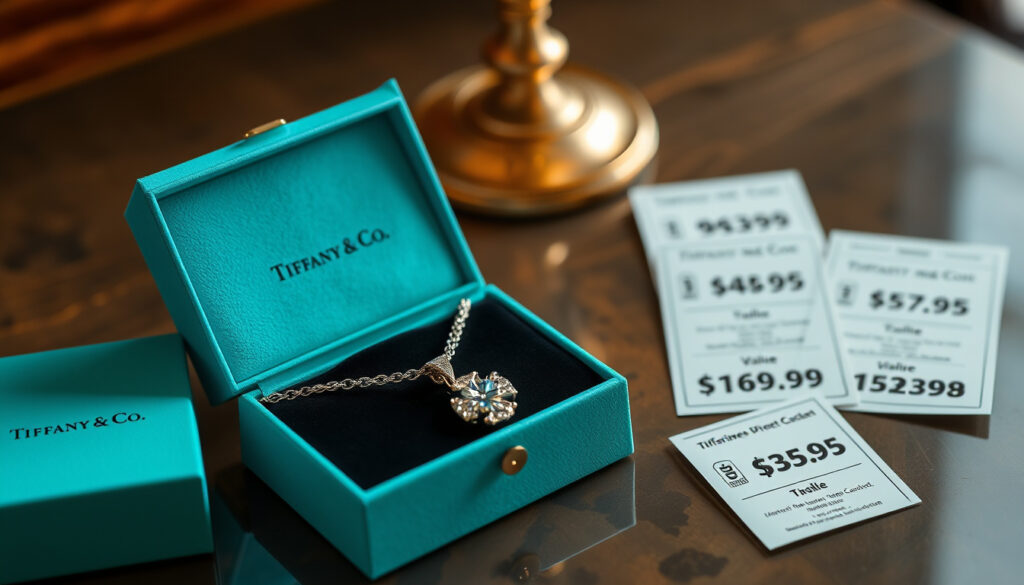
Tiffany and Co Necklace: Prices, Resale Value Guide
The Tiffany Blue Box carries cultural weight few brands achieve—but what are you actually paying for when you buy a Tiffany & Co. necklace, and can you recoup that cost later? This guide cuts through the luxury packaging to examine real numbers: resale percentages, material facts, and why some collections hold value far better than others.
Entry price: $118+ for sterling silver · Top retail example: €5,600 Link Necklace · Resale range: 50%-100% of retail depending on collection · Top platforms: The RealReal, Fashionphile (30%-70% below retail)
Quick snapshot
- Sterling silver (925) is standard in legacy pieces (Sebastian Charles)
- Basic collections retain 50%-80% of retail on resale (Sebastian Charles)
- Elite lines like Elsa Peretti hold 70%-100% of value (Sebastian Charles)
- Exact long-term appreciation data before 2020
- Regional price variations between US and European/Asian markets
- Official Tiffany resale or certification program details
- Vintage Tiffany prices hit record highs on resale platforms (PreLoved Pod)
- Knot by Tiffany rose $700; Hardware MSRP now $3,500 (PreLoved Pod)
- Elsa Peretti Bean resale up 27% recently (PreLoved Pod)
- Pre-owned demand continues climbing as primary prices rise (PreLoved Pod)
- Vintage and limited-edition necklaces likely to appreciate further (PreLoved Pod)
- Classic collections (Return to Tiffany, Elsa Peretti) dominate collector interest (PreLoved Pod)
The table below summarizes the key material and market attributes across Tiffany necklaces.
| Attribute | Details |
|---|---|
| Primary Material | Sterling silver (925) and gold (14k, 18k) |
| Key Collections | Return to Tiffany, HardWear, Elsa Peretti, Knot by Tiffany |
| Example Price | €5,600 Link Necklace in Yellow Gold with Freshwater Pearls (Tiffany.ie) |
| Resale Platforms | The RealReal, Fashionphile (30%-70% below retail) |
| Value Retention (Basic) | 50%-80% of original retail |
| Value Retention (Elite) | 70%-100% of original retail |
| Top Retailer | Tiffany.ie (official); Selfridges, Brown Thomas (authorized) |
| Tiffany Tax | 2x-5x multiplier over raw silver melt value |
Why are Tiffany’s so expensive?
The sticker shock is real. A simple sterling silver necklace from Tiffany & Co. can cost hundreds of dollars—far more than the silver itself would command on the commodities market. Understanding why requires looking at the brand’s 181-year history and the craftsmanship embedded in every piece.
Brand heritage factors
Tiffany & Co. was founded in New York City in 1837, and the brand has spent nearly two centuries building a reputation for quality and exclusivity. This legacy translates into what market analysts call the “Tiffany Tax”—a premium that can be 2x to 5x higher than the raw material value of a piece. The name itself carries cultural weight, recognized globally as a marker of luxury and occasion.
Material and craftsmanship costs
Beyond branding, actual production costs drive pricing. Tiffany sources precious metals carefully, employs master jewelers who train for years, and maintains workshops in New York’s jewelry district. Hand-finishing and quality control add significant labor costs that don’t show up in the weight of the silver alone. The Knot by Tiffany collection recently saw a $700 price increase, while the Hardware collection MSRP jumped $300 to $3,500—adjustments that reflect both material costs and market positioning.
You’re not paying for just silver. The premium reflects decades of design investment, artisan training, and the brand’s global prestige—what collectors pay extra for when they buy Tiffany on the secondary market.
Upsides
- High resale value compared to generic sterling silver (50%-100% vs. near melt)
- Global brand recognition adds portability and tradeability
- Classic designs hold appeal across decades, reducing fashion risk
- Condition and provenance significantly impact resale positively
Downsides
- Primary market prices have increased sharply in recent years
- Damaged pieces drop to near melt value regardless of brand
- Trend-driven pieces depreciate faster than classic designs
- Secondary market requires authentication due to counterfeits
Is Tiffany jewelry really worth it?
Whether Tiffany pieces justify their prices depends on what you’re buying. For pure material value, the answer is a clear no—you’re paying a substantial premium for the name and the craftsmanship. But for resale potential and lasting design quality, the picture looks different.
Quality vs price debate
Analysis from jewelry resale experts confirms that Tiffany & Co. sterling silver holds its value exceptionally well compared to generic sterling silver, which typically sells near its melt value. The “Tiffany Tax” reflects genuine market demand: collectors and fashion-conscious buyers actively seek authenticated pieces on secondary platforms. According to The Diamond Oak, resale value is driven by prestige, craftsmanship, and limited edition runs—factors that go beyond the silver content.
Customer value perceptions
For buyers planning to resell eventually, Tiffany necklaces offer a fundamentally different proposition than most fashion jewelry. The RealReal reports that secondhand Tiffany remains better value than retail despite recent price hikes. A spokesperson noted that “you are still getting a great deal by shopping at resale,” especially for pieces in excellent condition with original packaging.
“Tiffany & Co. sterling silver holds its value exceptionally well, especially compared to generic sterling silver.”
— Sebastian Charles (Jewelry Resale Expert)
How much is Tiffany & Co. jewelry worth?
The answer varies dramatically depending on which collection you’re looking at, the material, and the condition. Here is how the pricing breaks down across retail and resale channels.
Retail pricing examples
Current retail prices span a wide range. Sterling silver necklaces start around $118 for basic designs, while the Link Necklace in Yellow Gold with Freshwater Pearls lists at €5,600 on Tiffany.ie. Premium collections command significantly more: the Knot by Tiffany and Hardware lines now carry MSRPs starting at $700 and $3,500 respectively after recent price increases.
Resale value guide
The secondary market tells a nuanced story. On The RealReal, an Open Heart Pendant Necklace sells for $385, representing a 53% discount from its estimated retail of $825. eBay listings show a Lock Necklace in sterling silver at $195 and a Small Bean Necklace Sterling Silver 925 at $118. An antique Tiffany Sterling Silver Necklace recently carried auction estimates of $480-$600 on Bidsquare.
These examples illustrate how resale prices vary across platforms and conditions.
| Necklace Model | Material | Retail Estimate | Resale Price | Platform |
|---|---|---|---|---|
| Link Necklace | Yellow Gold | €5,600 | Varies by condition | Tiffany.ie |
| Open Heart Pendant | Sterling Silver | $825 est. | $385 | The RealReal |
| Lock Necklace | Sterling Silver | Market rate | $195 | eBay |
| Small Bean Necklace | Sterling Silver 925 | Market rate | $118 | eBay |
| Return to Tiffany Bracelet | Sterling Silver | Varies | 41% below retail | Fashionphile |
“It is still an incredible value. You are still getting a great deal by shopping at resale.”
— Sciacca, The RealReal (Luxury Resale Platform)
Condition and provenance matter enormously. Mint condition pieces with original packaging and receipts command top dollar; damaged pieces sell near melt value regardless of collection.
Is Tiffany’s actual silver?
Yes—Tiffany & Co. is known for its use of genuine sterling silver, which is 92.5% pure silver alloyed with other metals for durability. The brand’s heritage with sterling silver runs deep, dating back to some of its most iconic collections.
Sterling silver legacy
Tiffany has used sterling silver (hallmarked 925) in jewelry since the 19th century. The Return to Tiffany collection, featuring the signature heart tag, exemplifies this tradition—pieces are crafted from solid sterling silver, not plated. This material choice contributes to the brand’s reputation for quality and explains why Tiffany silver holds value better than costume jewelry.
Material verification
Authentic Tiffany pieces are stamped with appropriate hallmarks indicating metal content. The Diamond Oak notes that Tiffany silver outperforms generic silver, which sells near its melt value. The brand’s “Tiffany Tax” premium—2x to 5x over raw silver melt value—reflects both the quality of materials and the craftsmanship invested in each piece.
Do Tiffany necklaces hold value?
For most luxury goods, the answer is an emphatic no—watches, bags, and fashion pieces typically depreciate the moment you walk out of the store. Tiffany necklaces are a notable exception, with resale data showing consistent value retention across multiple collections.
Resale market evidence
Data from Sebastian Charles shows that basic Tiffany sterling jewelry holds 50%-80% of original retail value on resale, while high-end collections such as Elsa Peretti hold 70%-100% of value. Some pieces even appreciate: vintage Elsa Peretti Bean necklaces saw a 27% price increase recently, while vintage Bone Cuff pieces rose 30% and charm bracelets climbed 21%.
Comparison to competitors
Tiffany’s value retention stands out in the luxury jewelry market. Generic sterling silver jewelry typically sells near its melt value—often just $5-$15 for common pieces regardless of original retail. Even compared to other luxury brands, Tiffany necklaces command a premium on the secondary market that reflects the brand’s enduring appeal.
Buyers who prioritize long-term value retention should focus on classic collections over trend-driven pieces.
| Factor | Impact on Resale | Data Source |
|---|---|---|
| Collection type (basic vs. elite) | 50%-80% vs. 70%-100% retention | Sebastian Charles |
| Condition (mint vs. damaged) | Mint commands premium; damaged near melt | Sebastian Charles |
| Provenance (packaging, receipt) | Boosts authenticity verification | The Diamond Oak |
| Design age (vintage vs. current) | Vintage pieces appreciating 21%-30% | PreLoved Pod |
| Platform choice | Authenticated platforms price higher | Fashionphile, The RealReal |
| Material premium (Tiffany Tax) | 2x-5x over raw silver melt | Vintage Garden Art |
Economic downturns lower resale demand, while market booms raise prices. Buyers who purchase at peak prices during economic uncertainty may face losses.
The implication: not all Tiffany necklaces are created equal in the resale market. Choosing classic designs over trend-driven pieces, maintaining pristine condition, and preserving original packaging can mean the difference between retaining 80% of your investment and losing half its value.
Related reading: Zoe and Morgan Earrings · Tommy Hilfiger TH Sun RX 43
youtube.com, thediamondoak.com, sebastiancharles.com, vintagegardenart.com, bidsquare.com, fashionphile.com, therealreal.com, walterbaumanjewelers.com, thesilvertrove.com
While resale values often reach 50-100% of retail, the 2025 prices and styles guide offers fresh insights into evolving Tiffany necklace pricing and authenticity markers.
Frequently asked questions
Where can I buy Tiffany & Co. necklaces on sale?
Tiffany rarely discounts directly, but authenticated pre-owned platforms like Fashionphile and The RealReal offer 30%-70% below retail. These platforms verify authenticity and often include original packaging. Tiffany.ie lists current retail prices for new purchases.
What is the Return to Tiffany collection?
Introduced in 1969, Return to Tiffany features heart-shaped tag pendants inspired by the brand’s Victorian heritage. Made from sterling silver, these pieces are among the most recognizable Tiffany designs and hold strong resale value—often selling at 41% below retail on authenticated platforms.
How do Tiffany necklaces compare to Cartier in price and value?
Cartier generally commands higher retail prices for comparable pieces. On resale, both brands hold value better than generic luxury, but Tiffany’s lower entry point (starting around $118 for silver) makes it more accessible while still maintaining strong secondary market performance.
What is the price range for Tiffany gold necklaces?
Gold Tiffany necklaces start higher than silver pieces. The Link Necklace in Yellow Gold with Freshwater Pearls lists at €5,600 on Tiffany.ie. Prices vary by collection, gold karat, and design complexity, with premium pieces reaching significantly higher price points.
Can I find Tiffany necklaces at Brown Thomas?
Brown Thomas is an authorized Tiffany retailer in Ireland, alongside Tiffany.ie (official) and Selfridges (UK). These retailers offer new purchases with full warranty and authenticity guarantees. For discounted options, authenticated pre-owned platforms provide alternative access.
More related posts
 Rakon Share Price NZX: Why Shares Are Rising and What’s Next
 Kerala Weather Today: Forecast, IMD Alerts & El Niño Impact
 Service Station Near Me: Ireland, Australia Slang & Sleeping Rules
 What Is an NFT Marketplace? Definition & How It Works
 Grizzlies vs 76ers Match Player Stats: 2025-26 Analysis
 De’Longhi Coffee Machines: Best Models, Reviews & Ireland Guide
 Latest Breaking News Today NZ: Headlines, Migration, Culture
 225 USD to NZD – Convert US Dollars to New Zealand Dollars