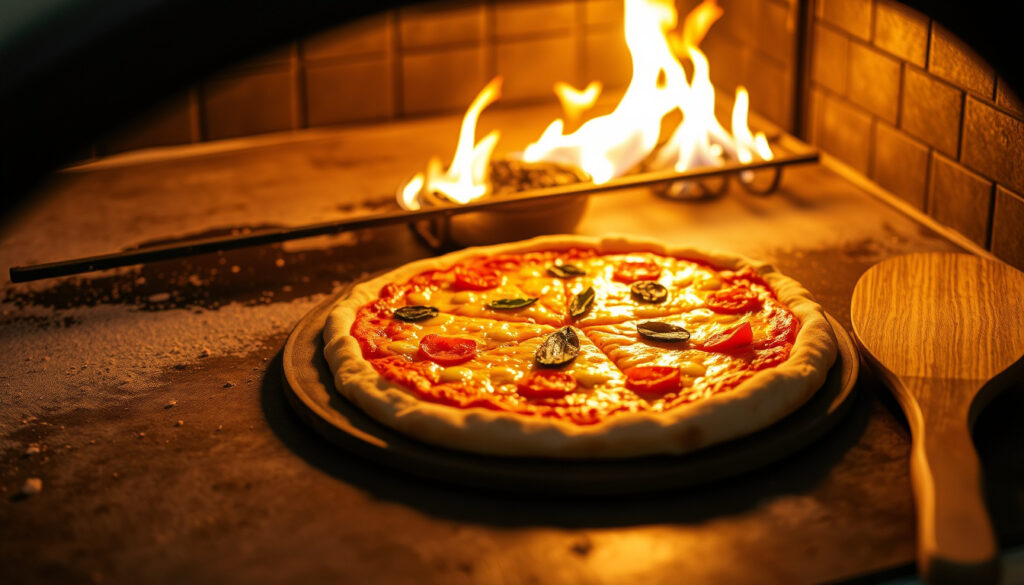
What Is a Pizza Stone? Guide to Uses, Materials & Alternatives
Most home ovens struggle to replicate the dry, radiant heat of a pizzeria deck. A pizza stone — a flat slab placed on your oven rack — bridges that gap by absorbing moisture and distributing heat evenly across the dough.
Common Material: Cordierite · Primary Use: Baking crispy pizza crust · Alternative: Pizza steel or baking steel · Heat Requirement: Preheated in oven · Durability: Lasts years with proper care
Quick snapshot
- Absorbs moisture from dough for a crispier crust (Pala Pizza)
- Made from heat-resistant materials like cordierite (Tasting Table)
- Cordierite stones conduct heat at 2.5–3 W/mK (Pizza Blab)
- Whether professional Italian pizzaioli widely use cordierite stones in their operations
- Exact lifespan without regular use or specific maintenance conditions
- Cordierite became standard for home pizza stones during the recent home oven baking trend
- Pizza steels gained popularity as an upgrade from stones in the post-2010s era
- Understanding when a pizza stone actually improves crust quality
- Weighing steel vs. stone for specific oven types and pizza styles
| Property | Value |
|---|---|
| Definition | Portable flat baking surface |
| Materials | Ceramic, stone, cordierite |
| Best For | Pizza and bread crusts |
| Pre-heat Time | 45–60 minutes |
| Not For | Microwave use |
| Max Operating Temp | Varies by material; cordierite handles up to 1400°F |
Does a pizza stone really make a difference?
Put a raw dough base on a cold rack and the heat transfers slowly from below, leaving you with a pale, rubbery crust. Place that same dough on a preheated stone and everything changes. The hot surface instantly contacts the dough, driving moisture out and creating the Maillard reaction that browns and flavors the crust. Tasting Table’s material guide notes that pizza stones are usually thicker and heavier than steels, making them slower to heat but capable of sustained, even output across multiple bakes.
Pizza Stone vs. No Pizza Stone
When you bake without a stone, your oven’s heat arrives through air and metal racks — fine for thin-crust supermarket pizza, but problematic for anything with actual hydration. A stone does three things air can’t replicate as efficiently:
- Transfers heat directly into the dough’s base via conduction
- Wicks moisture away from the dough’s surface (stones are porous; steel is not)
- Maintains temperature when you slide successive pizzas onto the surface
In practical terms, baking on a stone at 450–500°F cuts the time needed to set a proper crust from five or six minutes down to three. The bottom firms up fast enough that the center doesn’t sag when you lift a slice.
Crust Quality Comparison
The difference shows up most clearly in a side-by-side test. A pizza baked on parchment on a cold rack produces a soft, steamed bottom. The same dough on a preheated cordierite stone produces a crust that holds its shape, browns evenly, and fractures with a satisfying snap. The moisture-wicking property of the porous stone is the mechanism: it draws water out of the dough faster than your oven’s radiant heat can steam it back in.
The stone only delivers this performance if it’s properly preheated. Skipping the 45–60 minute heat-up means your stone acts as a thermal buffer — pulling heat away from the dough rather than pushing it into the base.
What is pizza stone made of?
Most consumer pizza stones are built from cordierite, a naturally occurring mineral composed of magnesium, silicon, aluminum, and iron. Pala Pizza’s material guide explains that cordierite resists thermal shock — meaning you can take it from a cold pantry and place it in a preheated oven without the risk of cracking that affects ordinary ceramics. That resistance is what makes it practical for home use.
Cordierite Composition
Cordierite scores a conductivity rating of 2.5–3 W/mK, which Pizza Blab’s technical analysis confirms is the highest among natural stone materials — roughly two to four times better than fire brick or chamotte. It also has a heat capacity of 0.9 J/(g·°C) and a density of 2.0–2.3 g/cc, which means it holds thermal energy without overheating the crust’s bottom.
- Composition: magnesium, silicon, aluminum, iron oxide
- Conductivity: 2.5–3 W/mK (highest among pizza stones)
- Heat capacity: 0.9 J/(g·°C)
- Density: 2.0–2.3 g/cc
- Temperature range: suited for 260–400°C, effective in standard home ovens
Pizza Stone vs. Baking Stone Materials
“Pizza stone” and “baking stone” are often used interchangeably, though a baking stone may also refer to surfaces for bread. Both terms describe the same function: a flat, heat-retaining platform for direct dough contact. The materials differ by price point and performance tier:
- Cordierite: the dominant material in consumer stones, resists cracking, works in home ovens up to 400°C
- Biscotto: natural Italian clay, best for Neapolitan pizza at 400–509°C, superior moisture absorption (Black Rock Grill)
- Ceramic: lower conductivity than cordierite, more prone to thermal shock, budget option
- Cast iron: extreme conductivity but heavy, requires seasoning, good for grill use
Cordierite can burn the bottoms of pizzas at very high temperatures (above 400°C), particularly for Neapolitan-style pies where a biscotto stone handles the heat more evenly. For standard home ovens, cordierite remains the most practical material.
What can I use instead of a pizza stone?
Not every kitchen needs a dedicated pizza stone. Several alternatives deliver similar results, and the right choice depends on your oven type, budget, and how often you bake.
Pizza Steel Advantages
A pizza steel — a thick slab of seasoned steel — heats faster and conducts more energy into the dough than any stone. Cooking Steels’ comparison notes that steel can be up to 20 times more conductive than cordierite, which translates to a crisper crust in a shorter bake time. Fabioulous Pizza’s comparative test recorded a steel reaching 347°C in 32 minutes, baking a pizza in 2 minutes 45 seconds — versus a stone reaching 316°C in 40 minutes with a 3-minute bake.
The comparison table below summarizes the key differences between pizza stones and steels for home oven use.
| Material | Pizza Stone (Cordierite) | Pizza Steel |
|---|---|---|
| Preheat time (to operating temp) | 40 minutes | 32 minutes |
| Maximum temp achieved | 316°C | 347°C |
| Heat conductivity | 2.5–3 W/mK | ~20× better than cordierite |
| Moisture absorption | Porous, wicks moisture | Non-porous, zero absorption |
| Risk at high heat | Can burn crust at 400°C+ | High burn risk at very high temps |
| Weight | Heavier, thicker | Heavier but thinner possible |
| Durability | Lasts years, can crack | Indestructible |
| Price range | $–$$ | $$–$$$ |
| Best for oven type | Standard home ovens, Ooni/Gozney | Standard home ovens, NY/Detroit style |
DIY Homemade Options
If you’re not ready to buy a dedicated stone, unglazed quarry tiles from a hardware store work as a budget substitute. Choose tiles that are at least 0.5 inches thick, unglazed, and free of surface treatments. Stack two tiles on your oven rack to create a flat surface. The results won’t match a quality cordierite stone, but they’ll produce a noticeably better crust than baking directly on the rack.
Baking Steel for Bread
The same principle that makes a pizza steel effective — rapid, sustained heat transfer — applies to bread baking. A baking steel placed in your oven simulates the floor of a professional deck oven. The trade-off is weight: most baking steels are heavier than stone equivalents, which makes them harder to move for storage between uses.
For standard home ovens (the kind found in most US and European kitchens), a pizza steel offers the clearest upgrade path over a stone. But if you own an Ooni or Gozney portable pizza oven, cordierite is the standard deck material precisely because it avoids the burning issues that steel creates at very high temperatures.
Do you heat the pizza stone up before putting the pizza on it?
Yes — and this is the step most home bakers skip. A cold stone pulled straight from the pantry acts as a heat sink, pulling energy away from your pizza rather than driving it into the crust. Artisan Pizza Kitchen’s care guide recommends preheating your stone for 45–60 minutes at 450–500°F before baking.
Preheating Steps
Follow these steps to get the best results from your pizza stone:
- Place the stone on the middle oven rack before you turn the oven on
- Set the oven to 450–500°F (230–260°C)
- Allow 45–60 minutes for the stone to reach full temperature
- Use a pizza peel or floured surface to transfer the dough directly onto the hot stone
- Remove the pizza with a peel or wide spatula once the crust is set and browned
Usage in Home Oven
The critical point is direct contact: pizza slides onto the stone from a floured peel, touching the surface immediately. Do not use parchment paper between the dough and the stone — it insulates the base and defeats the purpose of the stone’s direct heat transfer.
Once your pizza is baking, resist the urge to rotate it early. The stone’s heat radiates evenly, and a 3–5 minute uninterrupted bake allows the crust to set fully. If you’re making multiple pizzas, leave the stone in the oven between bakes — it holds heat better than your oven’s air and recovers faster for the next pizza.
Do not expose a hot cordierite stone to cool air drafts (opening the oven door mid-bake or placing it on a cold surface immediately after baking). Rapid temperature changes can cause cracking, especially in lower-quality cordierite stones. Let it cool gradually in the oven or on a heat-safe surface.
How to Clean a Pizza Stone
Unlike most kitchen equipment, a pizza stone gets cleaner with use. The baked-on residue is organic matter from dough — flour, starch, and the carbonized crust that forms over time. These deposits are not harmful and, in fact, help season the stone’s surface.
Daily Maintenance
- After baking, allow the stone to cool to room temperature in the oven
- Use a bench scraper or metal spatula to dislodge food debris while the stone is still warm
- Wipe with a damp cloth only — never soap, which the stone absorbs and later releases onto food
- Never submerge a stone in water or run it through a dishwasher
Deep Cleaning Methods
For stubborn residue after months of use:
- Place the stone in a 500°F oven for one hour to carbonize deposits, then scrape clean while warm
- Use a stiff brush under hot running water — no soap — then dry immediately in a warm oven
- Avoid soaking or using degreasers, which penetrate the stone’s pores and create off-flavors
Storage Tips
Store the stone flat in a dry location. If stacking multiple stones, place a layer of parchment paper between them to prevent scratching. Do not place heavy items on top of the stone — impact can cause hairline cracks that eventually split the surface.
The stains you see on an older pizza stone are a sign of proper seasoning, not poor cleaning. A perfectly clean stone after years of use means it’s not absorbing the oils and starches that help future crusts brown evenly. Embrace the patina.
The implication: a well-maintained cordierite stone lasts a decade or more. The cleaning ritual is minimal — scrape, wipe, cool, repeat. The longer you use it, the better it performs.
Pros and Cons of Pizza Stones
Upsides
- Produces crispier crusts through direct heat conduction and moisture wicking
- Maintains stable temperature across multiple consecutive bakes
- Cordierite resists thermal shock better than ceramic, reducing cracking risk
- Affordable entry point ($-$$) compared to pizza steels ($$–$$$)
- Works in standard home ovens and portable pizza ovens (Ooni, Gozney)
- Improves with use as the surface seasons over time
- Versatile: also effective for bread, flatbreads, and naan
Downsides
- Requires 45–60 minutes of preheating before first use
- Porous surface absorbs soap and retains flavors if cleaned improperly
- Heavy and awkward to move, especially larger models (14–16 inches)
- Can crack from thermal shock if exposed to sudden temperature changes
- Bakes crusts more slowly than steel at equivalent oven temperatures
- Limited effectiveness above 400°C for Neapolitan-style pizza
- Cannot be used in microwaves
Material Specifications
This table breaks down the thermal and physical properties of the three dominant pizza stone materials.
| Specification | Cordierite Stone | Pizza Steel | Biscotto Stone |
|---|---|---|---|
| Conductivity | 2.5–3 W/mK | ~20× better than cordierite | Lower than cordierite |
| Ideal temp range | 260–400°C | 230–350°C | 400–509°C |
| Thickness | 1–2 cm (typical) | 0.5–1 cm | Varies |
| Weight | Heavy, thicker slab | Heavy, thinner profile | Medium |
| Moisture absorption | High (porous) | None (non-porous) | Superior |
| Crack resistance | High (thermal shock resistant) | Virtually unbreakable | Moderate |
| Best pizza style | New York, pan pizza, general home use | New York, Detroit, crisped crusts | Neapolitan (wood-fired or high-heat) |
| Oven compatibility | Home ovens, Ooni, Gozney | Home ovens, some pizza ovens | Wood-fired, high-heat deck ovens |
“Steel and cast iron are better conductors — sometimes up to 20 times better — than clay, ceramic, or cordierite.”
— Pala Pizza Guide (expert review of baking surfaces, 2025)
“Among pizza stones, cordierite offers the highest conductivity — between 2.5–3 W/mK — which translates to faster preheating and more consistent bakes across multiple pizzas.”
— Pizza Blab (baking surfaces technical guide)
“If you choose to buy a baking stone, then make sure it is cordierite.”
— Fabioulous Pizza (pizza expert review)
Related reading: Slow Cooker Chicken Recipes · Bread and Butter Pickles Recipe
Home cooks worldwide, including in Vietnam, rely on pizza stones to achieve that restaurant-style crispy crust by wicking away moisture evenly.
Frequently asked questions
Is a pizza stone really necessary?
Not strictly — you can make pizza on a baking sheet or directly on an oven rack. But a stone solves the two biggest problems home ovens have: insufficient bottom heat and lack of moisture management. For anyone baking pizza more than once a week, the cost ($30–$80 for a cordierite stone) is worth the improvement in crust quality.
How long will a pizza stone last?
A quality cordierite stone lasts 10–15 years with proper care. Avoid thermal shock (sudden temperature changes), never wash with soap, and store flat. Cracking typically results from impact or thermal stress, not from normal use over time.
Do Italians use pizza stones?
In pizzerias using wood-fired ovens, traditional materials like biscotto (Italian clay) are preferred for their moisture absorption at very high temperatures. For home ovens in Italy, cordierite stones are common. Professional operations vary widely; the answer depends on the specific kitchen and pizza style being produced.
What do Italians use to stop pizza sticking?
Traditional Neapolitan pizzaioli use semolina flour or a fine dusting of tipo 00 flour on the work surface and pizza peel. The hot stone surface then bakes the base without requiring any release agent on the stone itself. Some use a thin layer of olive oil on the dough’s underside for additional lubrication.
What is a pizza stone for pizza oven?
A pizza stone for a pizza oven — whether a home pizza oven like Ooni or Gozney, or a professional deck oven — serves the same function as in a standard kitchen: it provides a hot, flat surface that directly contacts the dough base, driving moisture out and browning the crust. Ooni and Gozney ovens use cordierite as the default deck material because it handles the extremely high temperatures of these ovens without burning the pizza bottoms.
What is a pizza stone vs baking stone?
They are essentially the same product: a flat, heat-retaining surface for baking dough directly. “Pizza stone” emphasizes pizza-specific use, while “baking stone” is a broader term covering bread, pastries, and flatbreads. The materials and functionality are identical; the naming reflects marketing rather than engineering differences.
Pizza Stone vs. No Pizza Stone: Does a Stone Really Make for Better Crust?
Yes — a stone produces a noticeably better crust compared to baking directly on a rack or baking sheet. The stone’s direct heat transfer and moisture-wicking surface create a crispier, more evenly browned base. Side-by-side tests show the difference is visible and tangible: a stone-baked crust holds its shape when lifted, while a non-stone crust often droops or remains pale underneath.
For home bakers, the choice between stone and steel is a trade-off between oven compatibility and crust priority. In a standard kitchen oven, steel delivers faster, crisper results. In a portable pizza oven running above 450°C, cordierite stone remains the practical choice to avoid burnt bottoms. For most home cooks baking 1–3 pizzas at a time, a cordierite stone at $40–$70 provides the clearest improvement over baking directly on an oven rack — and with proper care, that stone will outlast the appliance it sits in.
More related posts
 Where to Buy Labubu NZ: Official Stores, Prices & Fake Spotting
 Homes for Sale Whangarei: Private, Rural & Cheap Listings
 Nothing Beats a Jet2 Holiday – ATOL Protection, Reviews and Awards
 Mike and Claire Sardina – No Evidence of Pasco Murder-Suicide
 My Life Is Murder Season 5: Premiere, Cast & Season 6 Status
 Spark NZ Share Price: Analysis, Dividends & Outlook
 Call Me by Your Name: Plot, Age Gap and Meaning Explained
 Dodgers vs Padres Match Player Stats: Last Game, All-Time