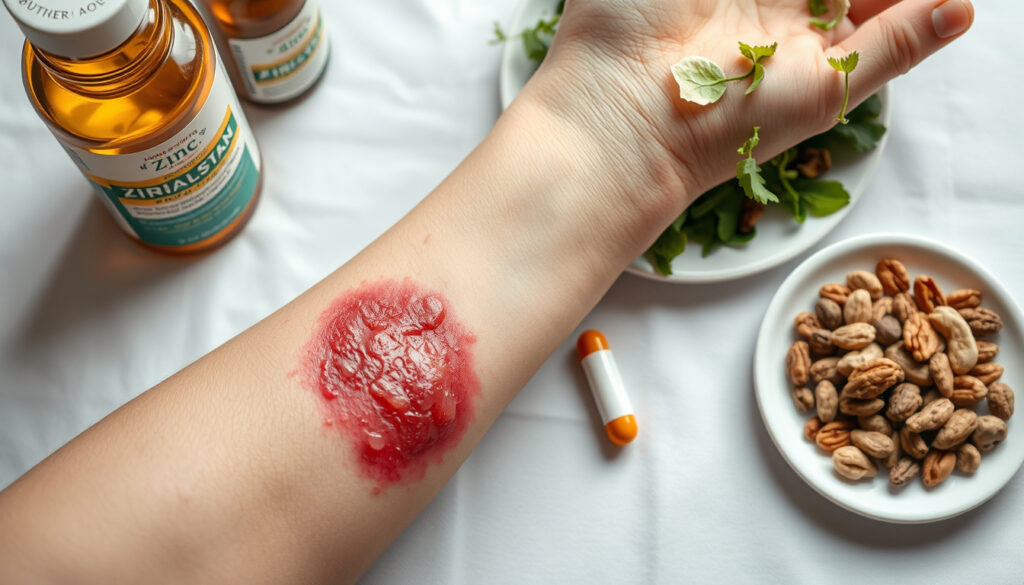
What Is Your Body Lacking When You Get Boils? Key Deficiencies
You scrub your skin and eat decently, yet painful red lumps keep appearing—often raising the question: what is your body lacking when you get boils? While Staphylococcus aureus is the direct cause, recurrent boils can point to nutritional gaps, particularly in zinc and vitamin D, that lower immune defenses.
Most common cause: Staphylococcus aureus · Typical healing time: 1–2 weeks · Common nutrient deficiencies: Zinc, Vitamin A, Vitamin D, B vitamins
Quick snapshot
- Boils are most often caused by Staphylococcus aureus (MedlinePlus Medical Encyclopedia, U.S. National Library of Medicine)
- Warm compresses help boils drain and heal (Cleveland Clinic, academic medical center)
- Recurrent boils may signal an underlying immune issue (InformedHealth.org, German Institute for Quality and Efficiency in Health Care)
- Exactly which nutrient deficiencies cause recurrent boils — some health websites suggest zinc, vitamin A, vitamin D, but evidence is limited (Docus.ai, consumer health site)
- Whether specific dietary triggers universally cause boils (Harvard Health Publishing, academic research unit)
- Optimal vitamin dosages for preventing boils — not established in clinical guidelines (Docus.ai, consumer health site)
- Typical boil resolves in 1–2 weeks with warm compresses (nidirect, U.K. government health service)
- Seek medical attention if no improvement in 2 weeks or if redness spreads (Mayo Clinic, U.S. nonprofit medical center)
- Signs of sepsis require emergency care within hours (CDC, U.S. public health agency)
- Address nutrient gaps through diet and supplements (after testing) (Better Health Channel, Victorian government health service)
- If boils recur, get checked for diabetes or immune disorders (MedlinePlus Medical Encyclopedia)
- Severe cases may need antibiotics or lancing by a doctor (NHS, U.K. public health authority)
Five key facts about boils, one pattern: the real driver is bacterial, but recurrence often points to something deeper.
| Attribute | Value |
|---|---|
| Definition | A painful, pus-filled bump caused by an infected hair follicle |
| Primary bacterium | Staphylococcus aureus |
| Common locations | Face, neck, armpits, buttocks |
| Typical duration | 1–2 weeks |
| Risk factors | Diabetes, poor nutrition, immunosuppression (MedlinePlus Medical Encyclopedia) |
What vitamins help stop boils?
Zinc for skin health and immune function
Zinc supports wound healing and immune cell activity. Some health resources suggest that low zinc levels could make you more prone to skin infections, including boils (National Institutes of Health Office of Dietary Supplements). However, no large-scale clinical trial has confirmed a direct causal link between zinc deficiency and recurrent boils. Still, ensuring adequate zinc intake through foods like lean meat, shellfish, and legumes is a sensible step.
If your diet is low in zinc, your immune system may not fight off S. aureus as effectively—turning a simple infection into a recurring nuisance.
Vitamin A and its role in tissue repair
Vitamin A supports the health of epithelial tissue, the skin’s first barrier against bacteria. A deficiency can impair wound healing and increase infection risk (Native Remedies, herbal supplement marketer). But because most people in developed countries get enough vitamin A from diet, deficiency-related boils are rare.
- Food sources: carrots, sweet potatoes, spinach, liver
- RDA for adults: 700–900 mcg per day
Vitamin D deficiency and susceptibility to infection
Vitamin D modulates the immune system. Low levels are associated with higher rates of skin and soft tissue infections (Better Health Channel). While not specific to boils, optimizing vitamin D status—through sunlight, fortified foods, or supplements—may reduce infection frequency.
Prevalence of insufficiency: ~40% of U.S. adults · Target blood level: 20–50 ng/mL (per Endocrine Society guidelines)
B vitamins and energy metabolism
B vitamins are essential for energy production and red blood cell formation. Severe deficiencies, particularly of B12 and folate, can weaken immune responses. However, direct evidence tying them to boils is thin (Your Health Magazine, health blog). A balanced diet typically covers these needs.
The implication: nutrient deficiencies are a plausible contributing factor, but they rarely act alone. The pattern is that multiple small gaps—not one magic vitamin—tip the immune balance.
What foods trigger boils?
Refined sugars and carbohydrates
High sugar intake can suppress white blood cell activity for hours after consumption (Harvard Health Publishing, academic research unit). This short-term immune dip may allow bacteria to flourish. Reducing added sugars is a low-risk strategy for anyone prone to skin infections.
Dairy products and inflammation
Some evidence links dairy to flares of hidradenitis suppurativa, a chronic condition characterized by boil-like lesions (American Academy of Dermatology, professional medical society). For those with this condition, cutting back on milk and cheese may reduce outbreaks.
Dietary triggers vary wildly between individuals. A food journal can identify your personal culprits—no universal “boil diet” exists.
Fried foods and trans fats
Trans fats promote systemic inflammation, which can impair immune function. They are best avoided for overall health, though their specific role in boils is indirect.
Spicy foods and irritation
Spicy foods do not cause boils, but they can aggravate existing skin inflammation in some people. No strong data supports a link.
What this means: an anti-inflammatory diet—rich in vegetables, lean protein, and healthy fats—may help reduce boil frequency, but it’s not a cure-all.
What illnesses cause boils?
Diabetes and high blood sugar
People with poorly controlled diabetes have a significantly higher risk of skin infections, including boils (InformedHealth.org). High blood glucose impairs neutrophil function, the frontline immune cells against bacteria. If you get recurrent boils, a blood sugar check is warranted.
Hidradenitis suppurativa
This chronic inflammatory condition causes recurrent, painful lumps under the skin, often misidentified as boils. It’s linked to genetics and hormonal factors, not hygiene (American Academy of Dermatology). Treatment requires specialized care.
Immunodeficiency disorders
Conditions like HIV, cancer, or long-term steroid use weaken the immune system, making it harder to clear S. aureus infections (nidirect, U.K. government health service). Recurrent boils can be an early clue to undiagnosed immune deficiency.
Skin conditions like eczema
Eczema damages the skin barrier, allowing bacteria to enter more easily. Children with eczema are prone to staph infections, including boils (Seattle Children’s Hospital, pediatric medical center).
The trade-off: while diabetes and hidradenitis are well-established causes, most people with boils do not have an underlying illness. Recurrence is the red flag.
What kills boils fast?
Warm compresses to promote drainage
Applying a warm, damp cloth for 10–15 minutes three to four times a day is the single most effective home treatment (NHS, U.K. public health authority). It increases blood flow, encourages the pus to surface, and speeds natural drainage.
Topical antibiotics like mupirocin
For superficial boils, over-the-counter mupirocin ointment can reduce bacterial load. However, deeper boils often require oral antibiotics (Mayo Clinic, U.S. nonprofit medical center).
Over-the-counter pain relievers
Ibuprofen or acetaminophen can manage discomfort but do not treat the infection.
When to see a doctor for drainage
If a boil does not drain after two weeks of home care, is larger than an inch, or is accompanied by fever, medical lancing may be necessary (NHS, U.K. public health authority). Never try to pop it yourself—pushing bacteria deeper can cause sepsis.
Delayed treatment of a large boil increases the risk of scarring and spread. Early intervention = faster resolution.
The pattern: warmth and time are the real “fast” remedies; antibiotics only help when the infection is severe.
Can a boil turn into sepsis?
Red streaks and spreading redness
Red streaks extending from the boil (lymphangitis) indicate the infection is spreading through the lymphatic system—a precursor to sepsis (CDC, U.S. public health agency).
Fever and chills
A body temperature above 100.4°F (38°C) with a boil suggests systemic infection. The combination of fever plus a skin abscess is a medical emergency.
Rapid deterioration
Sepsis can progress to septic shock within hours, causing confusion, rapid heart rate, and low blood pressure (CDC, U.S. public health agency).
“Sepsis is a medical emergency. Time matters. If you think you or someone else has sepsis, call 911 or go to a hospital immediately.”
— CDC, Sepsis Basics
The implication: a boil that comes with fever or red streaks is not a boil anymore—it’s a systemic warning. Immediate antibiotics and IV fluids can be lifesaving.
How to treat boils at home?
Home remedies can help mild boils, but severe or recurrent cases need medical evaluation. Follow these steps:
- Wash the boil and surrounding skin with antibacterial soap, then apply a warm compress for 10–15 minutes three times daily.
- Consider using a drop of diluted tea tree oil or castor oil on the boil after cleaning.
- Never squeeze or pop the boil; let it drain naturally.
- See a doctor if the boil is larger than 1 inch, does not heal in 2 weeks, or is accompanied by fever.
Clean the area and apply warm compress
Wash the boil and surrounding skin with antibacterial soap, then apply a warm compress for 10–15 minutes three times daily (NHS). Repeat until the boil drains naturally.
Use tea tree oil or castor oil
Tea tree oil has antibacterial properties against S. aureus in lab tests (PubMed, National Library of Medicine). Castor oil may reduce inflammation, though human studies are lacking. Use a diluted drop on the boil after cleaning.
Avoid squeezing
Popping a boil forces bacteria deeper into the skin, worsening the infection and risking sepsis (WebMD, consumer health publisher).
When to seek medical care
If the boil is larger than 1 inch, does not heal in 2 weeks, or is accompanied by fever, see a doctor (Mayo Clinic, U.S. nonprofit medical center). Recurrent boils (≥3 episodes per year) warrant a full medical workup.
“You can treat a boil at home by applying a warm flannel or compress to the area for 10 to 15 minutes, 3 or 4 times a day.”
— NHS, Boils Treatment
“A boil is a painful, pus-filled bump that forms under your skin when bacteria infect and inflame one or more of your hair follicles.”
— Mayo Clinic, Boils Causes
For the reader trying home care, the rule is simple: warmth, hygiene, patience—and when in doubt, let a medical professional take over.
Summary
A boil is your body’s loudspeaker for low-grade trouble: one boil is a minor infection, but recurrent boils are a message. That message could be a depleted zinc tank, out-of-range blood sugar, or an immune system running on reserves. For anyone stuck in the boil–heal–boil cycle, the choice is clear: get a nutrient panel, screen for diabetes, and treat the root cause—or keep fighting the same battle every few weeks.
Understanding what your body is lacking when you get boils can help you address key deficiencies and prevention before they recur.
Frequently asked questions
What does a sepsis boil look like?
A boil that turns septic may become larger, more painful, with red streaks radiating from it, and the surrounding skin may feel hot. Systemic signs include fever, chills, and confusion (CDC).
What is the best antibiotic for boils?
The choice depends on the severity and whether the infection is MRSA. Common options include cephalexin, clindamycin, or trimethoprim-sulfamethoxazole. A doctor should prescribe based on culture results (Mayo Clinic).
Can boils be prevented by diet?
While no diet guarantees prevention, a balanced diet rich in zinc, vitamin A, vitamin D, and B vitamins supports immune function. Avoiding excess sugar and processed foods may reduce inflammation (Better Health Channel).
Are boils contagious?
Yes, the bacteria (S. aureus) can spread through direct contact or contaminated towels and clothing. Practice good hygiene and avoid sharing personal items (NHS, U.K. public health authority).
What is the difference between a boil and a carbuncle?
A boil affects a single hair follicle; a carbuncle is a cluster of boils that form a deeper, more painful infection and often requires medical treatment (NHS).
Does stress cause boils?
Stress alone does not cause boils, but chronic stress can weaken the immune system, making you more susceptible to infections (Better Health Channel).
How long does it take for a boil to go away with treatment?
With warm compresses, most boils drain and heal within 1–2 weeks. Larger or deeper boils may take longer and can require antibiotics or lancing (Cleveland Clinic, academic medical center).
Should I pop a boil?
No. Popping pushes bacteria deeper and increases the risk of scarring and sepsis. Let it drain naturally or have a doctor lance it (WebMD, consumer health publisher).
More related posts
 Baradene College of the Sacred Heart – Complete Guide
 LA Clippers vs Houston Rockets Match Player Stats (Dec 23, 2025)
 ANZ NZ Internet Banking – goMoney Login, Features and Guide
 How Much Deep Sleep Is Normal? Expert Ranges & Tips
 Tom Phillips and His 3 Children: The Marokopa Story
 Cast of The Summer I Turned Pretty: Full Season 1-3 List
 Fast and Furious 11: Release, Cast & Paul Walker Return
 Best Pull Up Bar NZ: Kmart, Warehouse & Top Options