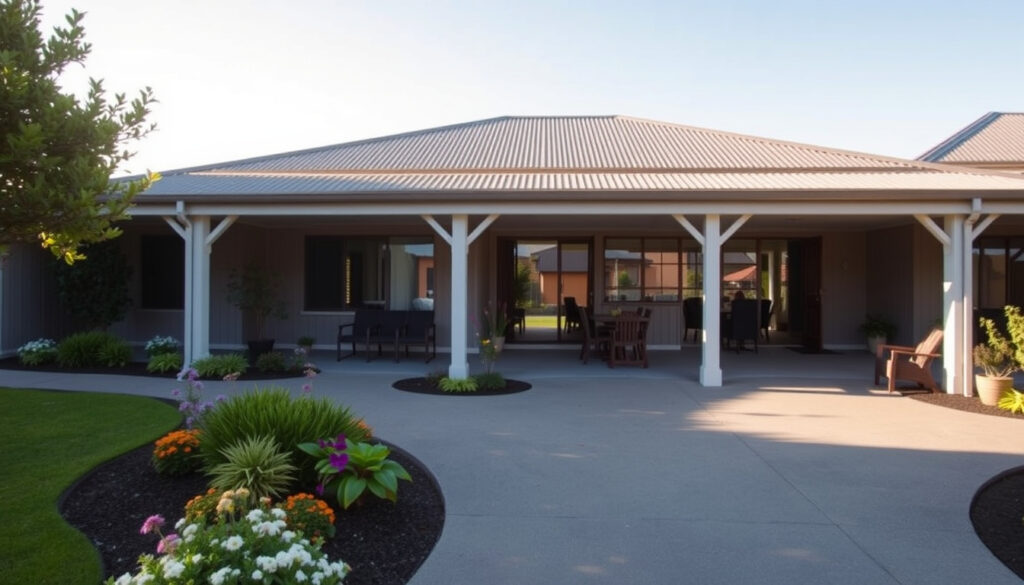
Royal Heights Rest Home: Massey Auckland Care Guide & Reviews
If you are comparing rest homes for a parent, partner, or someone close to you, the search can feel overwhelming fast — especially when each facility’s website reads similarly but hides the details that actually matter. Royal Heights Rest Home in Massey, West Auckland, shows up on several directories, but most sources give you a phone number and a service list without explaining what sets one facility apart from another. This guide cuts through that noise by pulling together verified certification data, audit findings, and what families actually report about daily life there.
Location: Massey, West Auckland ·
Capacity: 47 beds ·
Care Type: Rest home and residential care ·
Services: Day care, respite care ·
Ownership: Privately owned
Quick snapshot
- 47-bed facility in Massey, Auckland (Ministry of Health NZ)
- Operated by RH Healthcare Limited since November 2023 (Ministry of Health Audit PDF)
- Current certification valid until 10 November 2027 (Aged Advisor)
- Exact weekly costs for permanent, respite, and day care
- Current waitlist length or availability timeline
- Staff-to-resident ratios or detailed staffing numbers
- Full text of resident or family reviews beyond star ratings
- Facility purchased by current owners: November 2023 (Ministry of Health Audit PDF)
- Certification audit conducted: 27–28 August 2024 (Ministry of Health Audit PDF)
- Availability last updated on Eldernet: 25 March 2026 (Eldernet)
- Certification renewal scheduled for November 2027
- BSI Group New Zealand Ltd continues as auditor
- Facility currently accepting new permanent and short-term admissions
Seven verified attributes anchor any comparison with other West Auckland aged care facilities.
| Attribute | Value | Source |
|---|---|---|
| Address | 154 Royal Road, Massey, Auckland 0614 | Ministry of Health NZ |
| Total beds | 47 | Ministry of Health NZ |
| Provider | RH Healthcare Limited | Ministry of Health NZ |
| Phone | (09) 833 9333 | Healthpoint |
| Certification end date | 10 November 2027 | Aged Advisor |
| Auditor | BSI Group New Zealand Ltd | Ministry of Health NZ |
| Current availability | Standard and premium rooms available (updated 25 Mar 2026) | Eldernet |
Which is more expensive, home care or nursing home?
Comparing the cost of staying at home versus moving into a residential care facility depends heavily on the level of support someone needs. For someone who only needs help with meals, cleaning, and occasional transport, a package of home care services in New Zealand can run from a few hundred to over a thousand dollars per week — but that estimate leaves out equipment, home modifications, and the hidden time cost on family members. When a person needs daily help with medication, mobility, continence management, or supervision due to dementia, the math shifts quickly. Round-the-clock home care requires either live-in family support or paid caregivers, and even a modest formal arrangement rarely covers the full scope of what a rest home delivers with nurses, activities, and meals included.
Cost breakdown
The Ministry of Health funds aged residential care through a means-tested subsidy, which means eligible New Zealand residents do not pay the full listed price out of pocket. For those who qualify, the subsidy can cover a significant portion of the weekly care fee — but the remainder, known as the “co-payment,” still depends on asset testing and income. The actual weekly cost at Royal Heights Rest Home is not publicly listed across the major directories — a gap that forces families to call the facility directly for a personalised quote. What is clear from government guidance is that rest home care in New Zealand generally sits in a lower price band than hospital-level or dementia-specific specialist care.
Factors affecting price
- Care needs level: Rest home care costs less than dementia or hospital-level care. Each person is needs-assessed by the local Needs Assessment and Service Coordination (NASC) service, which determines eligibility for different care tiers.
- Room type: Royal Heights offers standard and premium rooms, with premium rooms described as more spacious and featuring direct courtyard access. Upgraded room categories typically carry an additional weekly premium.
- Means-tested subsidy: New Zealand’s rest home subsidy is conditional on asset and income testing. Assets above certain thresholds reduce or eliminate the subsidy entitlement.
- Additional services: Things like hairdressing, podiatry, or special dietary requests are usually charged separately and are not included in the base weekly fee.
The absence of publicly listed pricing across every major aged care directory means families cannot window-shop Royal Heights Rest Home against competitors without picking up the phone. Call (09) 833 9333 and ask specifically for the base weekly rate, the premium room surcharge, and what the means-tested subsidy process looks like for new admissions.
How do nursing homes work in New Zealand?
New Zealand’s aged residential care system is regulated under the Health and Disability Services (Safety) Act 2001, with the Ministry of Health overseeing certification and the Health Quality & Safety Commission monitoring consumer experience. Every certified rest home undergoes unannounced audits against the Nationwide Health and Disability Standards, and audit summaries are published on the Ministry’s website — meaning families can read what auditors actually found.
Daily operations
At Royal Heights Rest Home, daily life is structured around a published activities programme that includes a gym, swimming, bus trips, entertainers, happy hour, church services, art, gardening, housie, library sessions, outings, pool table, and BBQ events. The facility’s Eldernet listing also notes a residents committee, which provides a formal channel for feedback on menus, activities, and daily routines. A registered nurse manages the facility, and the audit report from August 2024 specifically noted that residents and family or whānau are involved in care planning, dietary decisions, and activity programming.
Admission process
- Needs assessment: Before entering any rest home, New Zealand residents must be assessed by a NASC service. This assessment, arranged through the GP or hospital discharge planner, determines which level of care is appropriate — rest home, hospital, or dementia care.
- Funding application: Once assessed as eligible for rest home-level care, families can apply to Work and Income (WINZ) for the means-tested residential care subsidy. The application considers assets, income, and relationship status.
- Facility inquiry: After confirming eligibility, families typically visit shortlisted facilities, meet with management, and request a formal admission agreement. At Royal Heights, admissions for both permanent and short-term or respite care are listed as currently open.
- Contract review: Under New Zealand consumer protection rules, residents or their representatives have the right to receive and review the admission agreement before signing. The agreement must itemise base fees, premium charges, and policies on discharge or temporary absence.
Royal Heights is a privately owned independent facility under RH Healthcare Limited — not part of a national chain. Independent facilities often have more flexibility in daily operations but may have less infrastructure for large-scale complaints handling. The facility’s audit history shows a switch from The DAA Group Limited as auditor to BSI Group New Zealand Ltd, which is a routine certification change.
What Is the Average Life Expectancy of a Person in a Nursing Home?
Studies from Australia and the United Kingdom — systems structurally similar to New Zealand’s model — consistently find that the average length of stay in a rest home before death ranges from around 18 to 30 months, though individual variation is wide. A person who enters a rest home at age 85 with multiple chronic conditions will have a different trajectory than a younger resident admitted for post-surgical recovery. The number is also sensitive to whether the facility includes dementia-specific units; residents in dementia care units often have shorter average stays due to the progressive nature of conditions like Alzheimer’s disease.
Factors influencing lifespan
The most significant determinants are not the facility itself but the resident’s baseline health: cognitive impairment at admission, mobility status, continence, and the presence of cardiovascular or respiratory conditions all carry weight. The quality of care — nutrition, medication management, fall prevention, social engagement — does contribute, and the August 2024 audit at Royal Heights found positive evidence for resident rights, dignity, and individualised care planning, all of which are considered contributors to wellbeing. A semi-secure dementia unit is available on site for residents who require a higher-security environment, which can affect both safety and quality of life outcomes for that group.
Dementia specifics
For residents with dementia, research suggests that structured environments with sensory activities, familiar routines, and trained staff can slow functional decline compared to unsupervised home settings. Royal Heights’ activity programme — which includes art, gardening, bus trips, and social events — aligns with evidence-based non-pharmacological approaches to dementia care. However, the facility’s dementia offering is described as a semi-secure unit rather than a fully specialised dementia care service, which may affect suitability for residents with more advanced or behaviours-of-concern presentations.
Average stay data varies significantly by country, care level, and how “entry into a nursing home” is defined in the study methodology. New Zealand-specific figures from aged care research are limited; the most reliable context comes from comparable systems in Australia and the UK rather than direct domestic datasets.
What is the life expectancy of a person with dementia at 75?
Life expectancy for a person diagnosed with dementia at age 75 varies considerably based on dementia type, comorbidities, and access to care. Population-level data from UK and European cohorts suggest a median survival of approximately 6 to 8 years from diagnosis for Alzheimer’s-type dementia in a 75-year-old, though individual trajectories range from under 3 years to over 12 years. For vascular dementia, prognosis is more closely tied to stroke history and cardiovascular risk factors. In New Zealand, the prevalence of dementia is projected to triple by 2050 according to Ministry of Health modelling, which will increase demand for both home-based and residential care options.
Age-specific data
At age 75, a person with mild dementia may live for several more years with appropriate community support before needing full residential care. The transition into a rest home typically occurs when community-based care is no longer sufficient to manage safety risks — wandering, medication non-adherence, or caregiver exhaustion. Royal Heights Rest Home, with its semi-secure unit, caters to some residents with dementia who require a lower-security environment than a fully locked unit but still need supervised care.
Nursing home impact
Evidence from residential care settings consistently shows that well-staffed environments with regular activity programming and individualised care plans are associated with better quality of life and slower functional decline for people with dementia. The August 2024 audit findings at Royal Heights specifically noted that residents receive care planned with their input and that dignity and respect were observed and confirmed by residents and families — factors considered protective in dementia care quality frameworks.
Upsides
- Independent ownership allows flexibility in daily programming and resident involvement in care decisions
- Semi-secure dementia unit offers a middle ground for residents who need supervision but not full lockdown
- Strong audit record from August 2024 on resident rights and dignity — both critical for dementia care quality
- Range of activities including sensory options (gardening, art, music) aligned with non-pharmacological dementia care approaches
- Cultural responsiveness: Māori kaupapa services, whānau room, residents committee
- Near Royal Heights Shopping Centre and public transport for family visits
Downsides
- No publicly listed pricing — families must call for a personalised quote
- Limited public review data: only 1 verified review on Aged Advisor, 9 on Birdeye; no Google reviews visible
- Bed count discrepancy across sources (47 vs 45) remains unresolved
- Staff-to-resident ratios not published
- No images or virtual tour available on the official website as of publication
- Facility described as “not responding” or full in some aged care directories — availability status may vary
What services does Royal Heights Rest Home offer?
Royal Heights Rest Home provides rest home care, day care, and respite care, with a published activities schedule that runs across physical, social, cultural, and recreational categories. The facility is purpose-built with all 47 rooms as single rooms with ensuites, which is a significant point of difference in a market where older facilities often still use shared rooms.
The activity programme as listed on Eldernet includes: gym sessions, swimming, bus trips, entertainers, happy hour, church services, art, gardening, housie, library, outings, pool table, and BBQ. Beyond recreation, the facility offers a whānau room, Māori kaupapa services, a residents committee, and caters for people under 65 with disabilities — unusual breadth for a facility of this size.
How to contact Royal Heights Rest Home
The table below summarises the main ways to reach the facility for enquiries about availability, costs, or admission.
| Channel | Details |
|---|---|
| Phone | (09) 833 9333 |
| Address | 154 Royal Road, Massey, Auckland 0614 |
| Hours | Open 24 hours |
| Website | rest-home.co.nz |
| Availability line | Standard and premium rooms listed as available (updated 25 Mar 2026) |
How to choose a rest home in Auckland
Selecting a rest home is not a single decision — it is a sequence of smaller choices that compound. Getting the care level right comes first, then affordability, then the specifics of daily life that show up in audit reports and resident feedback. For West Auckland families specifically, the Waitemata DHB region includes several facilities worth comparing, and the Ministry of Health’s certified providers register is the most reliable starting point.
- Start with the NASC assessment. Before narrowing down facilities, confirm eligibility through the Needs Assessment and Service Coordination service. Without this step, subsidy applications cannot proceed and families may pay full private rates unnecessarily.
- Use the Ministry of Health certified providers list. Every rest home in New Zealand must appear on the Ministry’s register with its certification status, audit history, and audit summaries. Royal Heights Rest Home’s page includes its address, provider name, auditor, and certification end date — all verifiable at health.govt.nz.
- Read the audit summary, not just the star rating. The August 2024 audit at Royal Heights identified positive findings on resident rights, dignity, and care planning — information that does not surface in star ratings. Audit summaries for certified facilities are available as downloadable PDFs from the Ministry’s website.
- Call and ask specific questions. Request the base weekly rate, premium room surcharge, means-testing support, staff qualifications, staff-to-resident ratios, and the most recent consumer satisfaction survey results. If a facility is reluctant to share basic operational data, that itself is informative.
- Visit at different times. A morning visit shows staffing levels and breakfast routines; an afternoon visit reveals activity engagement. Ask to see both standard and premium rooms if considering an upgrade.
- Check directory consistency. The bed count discrepancy at Royal Heights (45 vs 47 across directories) is a reminder to verify basic facts directly with the facility rather than relying on a single directory listing.
“Residents and family/whānau are involved in providing input into the resident’s care planning, their activities, and their dietary needs.” — Ministry of Health Audit Report, August 2024
“It was observed that residents are treated with dignity and respect, and this was also confirmed during interviews with residents and family/whānau.” — Ministry of Health Audit Report, November 2023
Related reading: Furniture Removals Auckland to Wellington · Grand Millennium Hotel Auckland
yellow.co.nz, villageguide.co.nz, reviews.birdeye.com, cab.org.nz, rest-home.co.nz
While Royal Heights serves Massey residents, Ryman also runs the Margaret Stoddart Retirement Village in Christchurch, offering comparable rest home-level care across the country.
Frequently asked questions
What services does Royal Heights Rest Home offer?
The facility offers rest home care, day care, and respite care. Activities include a gym, swimming, bus trips, entertainers, happy hour, church services, art, gardening, housie, library sessions, outings, pool table, and BBQ. A whānau room and Māori kaupapa services are also available.
Where is Royal Heights Rest Home located?
Royal Heights Rest Home is located at 154 Royal Road, Massey, Auckland 0614. It is within 150 metres of Royal Heights Shopping Centre and 160 metres of a bus stop, making family visits relatively accessible.
What are Royal Heights Rest Home reviews?
Public review data is limited. Aged Advisor shows an 80% satisfaction score based on a single review from the past 12 months. Birdeye aggregates 9 reviews with a 4.3-star average. No Google reviews were publicly visible across the sources reviewed. The Ministry of Health audit report from August 2024 is the most substantive source of third-party quality evidence.
Does Royal Heights Rest Home offer respite care?
Yes. Short-term and respite admissions are listed as available, and the facility is currently accepting both permanent and short-term admissions. Respite stays are subject to availability, so families should call ahead to confirm current capacity.
Is Royal Heights Rest Home suitable for dementia care?
The facility has a semi-secure unit designed for residents with dementia who require supervision but not full lockdown. It is not a specialist dementia care unit. For residents with more advanced dementia, behaviours of concern, or wandering risks that require a fully locked environment, a dedicated dementia-specific facility would be more appropriate.
How to contact Royal Heights Rest Home?
Call (09) 833 9333. The facility is open 24 hours. The official website is rest-home.co.nz. Families seeking cost information should call directly and ask for the base weekly rate, premium room surcharge, and information on the means-tested subsidy process.
What nearby facilities compete with Royal Heights Rest Home?
The West Auckland market under the Waitemata District Health Board includes several other certified rest homes in the Henderson-Massey area. The Ministry of Health certified providers register is the most reliable tool for comparing nearby options based on certification status, audit history, and care levels offered. Families should use the register alongside direct calls to shortlisted facilities to confirm current availability and pricing.
More related posts
 Grand Millennium Hotel Auckland – 5-Star CBD Stay Near Sky Tower
 Latest Breaking News Today NZ: Headlines, Migration, Culture
 What Is a Checksum? Definition, Examples, and How to Calculate
 Airport Lounge Access Without Koru Membership: 2026 Guide
 Waipu Caves Glow Worms: Free vs Paid Tour & Tips
 How to Check Countdown Gift Card Balance Online | Woolworths NZ
 Happy Anniversary Message to Couple: Best Wishes & Tips